Tourism That Heals
Regenerative Travel: Tourism That Restores, Renews & Revitalizes
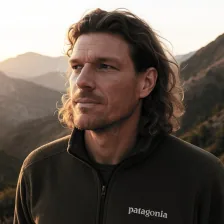
By Steven Keen
MSc candidate in Responsible Tourism Management, GSTC- and ICRT-certified.
7 min read Updated: Verified:
We stand at a critical juncture in the history of human travel. For the last fifty years, the dominant model has been industrial: maximize visitor numbers, extract value, and move on.
Regenerative Tourism asks a fundamentally different question: Not “how do we minimize our footprint?” but “how do we leave a positive handprint?” It transforms the traveler from a consumer of places into a co-creator of life.
An independent educational resource—not affiliated with the hospitality brand at regenerativetravel.com. This site sells nothing and takes no bookings.
Key Takeaways
- Sustainable tourism aims at neutral—doing no further harm. Regenerative tourism aims at net positive: the place is measurably healthier because visitors came.
- The shift follows Bill Reed’s trajectory for regenerative design: from less damage, through neutral, to participating in the health of the whole system.
- It is not ecotourism. Ecotourism is a nature-based product category; regeneration is a goal and a method that can apply to any trip, urban or rural.
- As of 2026 there is no official definition, standards body, or certification for regenerative tourism. Treat “certified regenerative” marketing with corresponding care.
- This is an independent educational resource by one named author—not affiliated with the hospitality brand at regenerativetravel.com. It sells nothing and takes no bookings.
From “Doing Less Harm” to “Doing More Good”
The shift follows the trajectory Bill Reed mapped for regenerative design—from less damage, through neutral, to participating in the health of the whole system1—carried into tourism by a fast-growing research literature.2 Dimension by dimension, as this site frames it:
| Dimension | Sustainable Tourism | Regenerative Tourism |
|---|---|---|
| View of Nature | Nature is a resource to be protected. | Humans and nature are one living system. |
| Operational Goal | Efficiency & “Do No Harm.” | Thriving of the whole system (Net Positive). |
| Problem Solving | Technical solutions (filters, solar). | Holistic solutions (ecosystem design). |
| Role of Visitor | Responsible guest. | Partner / Gardener / Co-creator. |
| Key Metric | Carbon Footprint / Waste Reduction. | Soil Health / Community Well-being. |
Embed this graphic
Free to embed. The embed keeps a visible credit linking back to this page.
Their Own Good Intentions
THE CODE · FREE · NO EMAIL
Beyond Good Intentions
A regenerative trip is never promised into being—it is checked into existence. Eleven evidence-based pages that turn good intentions into questions you can book on. Free and yours to keep, from our companion site on ethical tourism.
Get the free codeWhat “Regenerative” Actually Means
The word has a precise ancestry. In the built-environment literature, Bill Reed described a trajectory of ambition: from conventional practice (less damage), through “green” and “sustainable” (neutral—doing no further harm), to restorative and finally regenerative—where human activity participates in the health of the whole living system it belongs to.1 Tourism scholarship picked the trajectory up in earnest around 2020, when a wave of pandemic-era papers asked whether travel’s forced pause could become a genuine reset,3 and has since given the field its conceptual footing: a framework grounded in living-systems thinking,2 an argument that regeneration requires diverse economic practices—community enterprises, cooperatives, exchange beyond the market—rather than the same industry painted greener,4 and a state-of-the-art review consolidating what is known.5
Three commitments distinguish the regenerative frame from the sustainable one it grows out of. Net positive, not neutral: the benchmark is whether the place—soil, water, culture, community—is measurably healthier because visitors came. Place-based, not portable: regeneration cannot be cut-and-pasted between destinations, because it starts from what a particular living system needs. Hosts hold the pen: the community defines what “better” means, a principle this site anchors in Free, Prior and Informed Consent wherever Indigenous or local knowledge is involved. The full framework, with all ten principles as this resource synthesizes them, is on the definition page.
One honesty note before the enthusiasm: “regenerative tourism” has no official definition, no standards body, and no certification. The word is doing a lot of marketing work in travel right now, and part of this site’s job is to keep the claim and the evidence in the same sentence—the boundary section says exactly where the science ends and the aspiration begins.
The Demand Is Real. So Is the Say-Do Gap.
The consumer signal is loud: in Booking.com’s 2024 survey of more than 31,000 travelers, 75% said they want to travel more sustainably within the next year. The same research documents the catch: 45% feel sustainability matters but is not a primary consideration when they actually plan and book6—the intention-behavior gap that decides whether any of this changes real places.
Regenerative travel’s answer to the gap is structural rather than moral: make the better option the more interesting trip. A stay that plants you inside a working landscape—a terraced hillside being rebuilt, a seagrass meadow being monitored, a village economy that keeps its money local—outcompetes the generic alternative on experience, not guilt. Where claims need checking, the GSTC Criteria remain the baseline that “sustainable” assertions can actually be verified against; no equivalent standard yet exists for “regenerative,” which is a reason for more scrutiny, not less.7
What It Looks Like on the Ground
Regeneration stops being abstract the moment it has coordinates. Three patterns, all documented on this site’s own island:
Cultural infrastructure kept alive
Crete’s dry-stone terraces are climate infrastructure—slowing runoff, holding soil, sheltering biodiversity—and the craft that maintains them is UNESCO-inscribed intangible heritage.8 Every guest who joins a wall-mending day, or simply stays in a village where the walls still stand and pays people who maintain them, is funding maintenance the market otherwise forgets.
Ecosystems restored, not just spared
The Posidonia oceanica seagrass meadows off Crete’s coast are among the Mediterranean’s serious carbon and nitrogen stores, and their accumulation patterns are actively studied by Greek marine science.9 Anchoring rules, snorkel surveys, and visitor-funded monitoring turn tourism from the meadows’ pressure into part of their protection—on an island where 54 Natura 2000 sites cover roughly 141,000 hectares.10
The journey counted honestly
Getting there is part of the ledger. On European Environment Agency figures, rail averages 33 gCO₂e per passenger-kilometer against 160 for flying11—which is why regenerative itineraries favor fewer, longer trips with overland legs where geography allows, and treat the unavoidable flight as a reason to stay longer rather than a license to repeat.
The traveler’s version of all this—ten concrete practices, from booking to behavior—is the practical guide; the island’s full case is Regenerative Crete.
One Trip, Three Questions
This site holds one corner of a triangle that three resources by the same author draw together. Soft travel asks about the traveler’s state during the trip—the unhurried, permeable way of being there that regeneration quietly presupposes: you cannot help restore a system you rushed past. Transformational tourism asks about the traveler’s change after the trip—whether it durably shifts perspective and behavior. And this site asks about the legacy in the place: what remains in the soil, the economy, and the community when the traveler has gone home.
The three compound. A soft pace makes regenerative participation possible; participation in a place’s repair is exactly the kind of engagement the transformation literature finds durable; and a changed traveler is the one who comes back—or sends others—on the place’s terms. The connection to soft travel has its own essay.
Our Focus
The 10 Principles
Regeneration cannot be cut-and-pasted. Explore the framework of Place-Based solutions, Reciprocity, and Living Systems.
→ Explore the FrameworkThe Soft Travel Mindset
You cannot regenerate a system you do not understand. Discover why slowing down is the prerequisite for healing.
→ Soft Travel & RegenerationRegenerative Crete
Crete’s problem is distribution, not volume. See what the island’s water, terraces, and working villages ask of a visitor.
→ Destination GuideLetters from inside the question
The Other Side of Travel
The tourism industry is loud, crowded, and always trying to sell you something. These letters are the drive into the hills. A monthly dispatch exploring how to travel differently.
Read it before you decideRegeneration in Practice: Case Studies
Regeneration is only as real as its receipts, so every claim on this site is checked against a place that leaves the ground measurably better—a reclaimed pit, an audited archipelago, a reef funded by its visitors, an Indigenous co-governed park, a national pledge, a rewilded wetland, and one disclosed operator on Crete. Here is a look at all seven case studies, and where to read each in full.
- , read the case study
What Is Regenerative Tourism?
The Eden Project
A registered educational charity that rebuilt an exhausted Cornish china-clay pit into biomes housing the world’s largest indoor rainforest.
- , read the case study
In Practice
The Azores
The first archipelago in the world certified as a sustainable tourism destination by EarthCheck, an independent, science-based auditor.
- , read the case study
The Business Case
Bonaire National Marine Park
A non-profit foundation that funds the protection of an entire island’s reef almost wholly through a flat US$40 visitor fee.
- , read the case study
History of the Idea
Gwaii Haanas
A Haida Gwaii archipelago co-governed by the Haida Nation and the Government of Canada through an equal-seat board since 1993.
- , read the case study
How to Travel Regeneratively
The Palau Pledge and Ol’au Palau
A national eco-pledge, stamped into every passport, that each arriving visitor must sign before an immigration officer—a condition of entry since 2017.
- , read the case study
Soft Travel & Regeneration
Fundación Rewilding Argentina
An Argentine foundation whose reintroduction returned at least 20 free-ranging jaguars to the Iberá wetlands—the region’s first in roughly 70 years.
- , read the case study
Regenerative Travel on Crete
CRETAN®
The disclosed working model this resource’s author founded—a Crete operator steering visitor spending off the saturated coast to the inland villages that need it.
Frequently Asked Questions
What is the difference between sustainable and regenerative tourism?
Is regenerative tourism the same as ecotourism?
Is there a certification for regenerative tourism?
Is regenerative travel only for luxury resorts?
Is this site connected to the booking platform at regenerativetravel.com?
Steven spent a decade making documentaries in the places tourism forgets—with his work held in the archives of the UN’s International Labour Organization—before he went to live in one: a tiny mountain village on Crete. He is completing an MSc in Responsible Tourism Management, GSTC- & ICRT-certified, and the founder of CRETAN®, which serves as a case study. Read how these pages are edited.
Where to Go from Here
What Is Regenerative Tourism?
The full definition: where the concept comes from, the ten principles, and the honest limits of the term.
How to Travel Regeneratively
A greenwashing filter for vetting operators, protocols for engaging on the ground, and the long tail after you return.
The Business Case for Regenerative Tourism
Why restoring a place pays: asset protection, the seasonality dividend, and a twelve-month blueprint for hotels.
Explore Our Companion Resources
- responsibletourism.com Regeneration’s wider frame: evidence-based guides to responsible tourism, the UN SDGs, and a free Field Guide for travelers. (opens in new tab)
- transformationaltourism.com The change the trip leaves in the traveler, not the place: whether it durably shifts perspective and behavior after the return, the trait to soft travel’s state. (opens in new tab)
- softtravel.com The traveler’s side of the ledger: the gentle, unhurried way of being in a place while you’re actually there. (opens in new tab)
References
- Shifting from ‘sustainability’ to regeneration — Reed, B. Building Research & Information 35(6), 2007, pp. 674-680. https://doi.org/10.1080/09613210701475753 (accessed August 5, 2026). ↩
- Regenerative tourism: a conceptual framework leveraging theory and practice — Bellato, L., Frantzeskaki, N. & Nygaard, C. A. Tourism Geographies 25(4), 2023, pp. 1026-1046. https://doi.org/10.1080/14616688.2022.2044376 (accessed August 5, 2026). ↩
- Transforming the (tourism) world for good and (re)generating the potential ‘new normal’ — Ateljevic, I. Tourism Geographies 22(3), 2020, pp. 467-475. https://doi.org/10.1080/14616688.2020.1759134 (accessed August 5, 2026). ↩
- Regenerative tourism needs diverse economic practices — Cave, J. & Dredge, D. Tourism Geographies 22(3), 2020, pp. 503-513. https://doi.org/10.1080/14616688.2020.1768434 (accessed August 5, 2026). ↩
- Regenerative tourism: a state-of-the-art review — Bellato, L. & Pollock, A. Tourism Geographies 27(3-4), 2023, pp. 558-567. https://www.tandfonline.com/doi/full/10.1080/14616688.2023.2294366 (accessed August 5, 2026). ↩
- Booking.com Sustainable Travel Report 2024 — Booking.com, 2024 (company-commissioned consumer survey; methodology not published)—75% of surveyed travelers say they want to travel more sustainably in the next 12 months; 45% feel it is important but not a primary consideration when planning. https://news.booking.com/latest-bookingcom-sustainable-travel-data-reveals-ongoing-challenges-for-consumers--highlights-a-heightened-opportunity-for-cross-industry-collaboration/ (accessed August 5, 2026). ↩
- GSTC Criteria — Global Sustainable Tourism Council—the baseline standard sustainability claims can be verified against; no equivalent standard yet exists for “regenerative.” https://www.gstc.org/gstc-criteria/ (accessed August 5, 2026). ↩
- Art of dry stone walling, knowledge and techniques — UNESCO Representative List of the Intangible Cultural Heritage of Humanity, 2018 (Greece among the inscribing states). https://ich.unesco.org/en/Decisions/13.COM/10.b.10 (accessed August 5, 2026). ↩
- Patterns of Carbon and Nitrogen Accumulation in Seagrass (Posidonia oceanica) Meadows of the Eastern Mediterranean Sea — Apostolaki, E. T. et al. Journal of Geophysical Research: Biogeosciences, 2024. https://agupubs.onlinelibrary.wiley.com/doi/full/10.1029/2024JG008163 (accessed August 5, 2026). ↩
- About Natura 2000 on Crete — Region of Crete, official Natura 2000 portal—54 Natura 2000 sites on Crete covering about 141,318 hectares. https://natura2000.crete.gov.gr/?id=50 (accessed August 5, 2026). ↩
- Greenhouse gas emission efficiency of different transport modes (passenger) — European Environment Agency, 2022 (EU-27 data for 2018, well-to-wheel)—passenger trains average 33 gCO₂e per passenger-km vs. 160 for flights. https://www.eea.europa.eu/en/analysis/maps-and-charts/ghg-efficiency-of-different-transport-figures (accessed August 5, 2026). ↩
Further Reading
- Transformative roles in tourism: adopting living systems’ thinking for regenerative futures
Loretta Bellato, Niki Frantzeskaki, Carlos Briceño Fiebig, Anna Pollock, Elke Dens & Bill Reed · 2022 · Journal of Tourism Futures (Emerald)
- Regenerative tourism: a conceptual framework leveraging theory and practice
Loretta Bellato, Niki Frantzeskaki & Christian A. Nygaard · 2022 · Tourism Geographies (Routledge / Taylor & Francis)—open-access full text
- Guest editorial: Transformation and the regenerative future of tourism
Irena Ateljevic & Pauline J. Sheldon · 2022 · Journal of Tourism Futures (Emerald), Vol. 8(3)
- Regenerative tourism development as a response to crisis: harnessing practise-led approaches
2024 · Tourism Geographies (Taylor & Francis)—York St John University repository copy
Our Editorial Standards
This is an independent resource, written and maintained by Steven Keen—a responsible tourism practitioner based on Crete, completing an MSc in Responsible Tourism Management and certified by the GSTC and ICRT. Every statistic is cited to its primary source, every page carries an honest last-updated date, and where a figure cannot be verified, we flag it—rather than guess. Seasonal claims are re-checked on the island as the seasons turn, and every reference carries the date it was last accessed. We disclose our connection to CRETAN®, which serves as a documented case study. Nothing here is sponsored, and the site sells nothing and takes no bookings. Claims that expire carry a review date, and this site cannot be published after that date passes until the claim has been re-read. The ten principles are this resource’s working synthesis of a young, contested literature, and are labeled as such rather than passed off as canon. Read our full editorial standards.