The Business Case for Regenerative Tourism
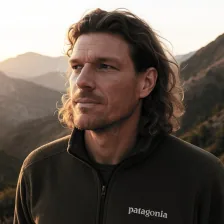
By Steven Keen
MSc candidate in Responsible Tourism Management, GSTC- and ICRT-certified.
16 min read Updated: Verified:
Regenerative tourism is not just ethical—it’s smart business. The operators who invest in the health of their destination today are building the foundation for tomorrow’s competitive advantage. This page makes that case the way this network makes every case: with the evidence stated honestly, including where it is thin.
Key Takeaways
- Tourism is 12.7% of Greek GDP directly (€30.2 billion, 2024) and of the order of 30% in total—an economy-scale bet on place-quality that almost no balance sheet depreciates honestly, and regeneration is the missing maintenance line.
- The seasonality dividend: 42% of Greek accommodation nights compress into July and August—which makes the empty ten months the real growth market, at near-zero ecological load.
- The strongest firm-level argument is asset protection: a tourism business sells the health of a place, so investing in that health is maintenance of the core asset—it pays whether or not the label ever does.
- Demand is real but bounded—75% of travelers say they want to travel more sustainably, while 45% admit it is not a primary booking consideration—so credible, verifiable offers win the segment that acts, and price premiums stay case-based, not proven at scale.
- The concession this page makes plainly: a saturated destination cannot regenerate its way around a volume problem it refuses to govern.
The Macro Numbers, Honestly Read
Start with the scale of what is at stake, using this network’s home economy as the worked example. By the Greek tourism confederation’s own research institute, tourism’s direct contribution to the Greek economy in 2024 was €30.2 billion—12.7% of GDP—and the total contribution, once multiplier effects through supply chains are counted, was of the order of 30% of GDP (the estimate ranges from 28.0% to 33.7% depending on the multiplier used).1 Read that as an accountant rather than a promoter: something approaching a third of a European economy is revenue generated by the attractiveness of places—coastlines, landscapes, villages, heritage—almost none of which appears on any balance sheet as the depreciating asset it is.
That is the business case at national scale, stated as risk: an economy this exposed to place-quality is making an enormous, unhedged bet on assets it mostly does not maintain. Every eroded beach, drained aquifer, and hollowed-out village is depreciation charged to nobody’s books until the bookings move elsewhere—at which point it is charged to everybody’s. Regeneration, in this frame, is not idealism grafted onto an industry; it is the missing maintenance line in the industry’s own accounts. A business that invests in the health of its place is simply the first firm on the register to depreciate honestly—and to repair instead.
The same logic scales down without losing force. A guesthouse’s enterprise value is mostly its setting; a dive operator’s inventory is a reef; a walking-tour company’s stock is a landscape and its silence. None of these appear in their books either. The operators who grasp that first are not buying a marketing position—they are recognizing where their capital actually sits.
The Seasonality Dividend
The second macro number is the strangest business opportunity in European tourism: 42% of the nights spent in Greek tourist accommodation fall in July and August alone.2 Two months carry nearly half the load; the other ten run the same beds, staff skills, and landscapes at a fraction of capacity. Peak-season growth in such a system is the worst revenue available—every additional August guest arrives when the aquifer, the roads, the housing market, and the residents’ patience are already at their limits, so the marginal euro carries the maximal damage.
Embed this graphic
Free to embed. The embed keeps a visible credit linking back to this page.
The regenerative reading turns the distortion into the strategy: the empty ten months are the growth market. Revenue moved into the shoulders and winter is income the destination gains at near-zero additional ecological load—the infrastructure exists, the staff want the work, the landscape has capacity to spare. And the products that fill those months are regenerative by their own nature, not by labeling: the olive-harvest stay, the walking week, the culture and food itineraries, the long off-season stays of remote workers—all of them longer, deeper, more locally spending forms of travel than the two-week beach trip they complement. This is the rare case where the yield curve and the ecology point the same direction, which is exactly why destination-level thinkers keep arriving at season-spreading as regeneration’s most bankable move.
For an individual operator the play is concrete: build the shoulder product now (what does this place taste, sound, and work like in November?), price the peak to fund it, and measure success in distribution—the share of annual revenue earned outside the peak—rather than in gross volume. A business whose income curve flattens is becoming structurally regenerative before a single hectare is restored, because it is unloading the months that damage and funding the months that don’t.
The Economic Imperative
1. Asset Protection
Tourism sells nature. If beaches erode, the business fails. Investing in dune restoration is investing in the hotel’s foundation. Environmental degradation is not an externality—it’s a balance sheet risk.
2. The “Search for Meaning” Market
75% of surveyed travelers say they want to travel more sustainably in the coming year.3 Stated intention is not booking behavior—the same research documents the gap—but the demand signal is real, durable, and growing. Offers that credibly answer it can position on purpose, not just on price.
3. Resilience via Supply Chains
Short local supply chains are less exposed to global logistics shocks than import-dependent ones—a lesson many operators drew from the pandemic years, and an argument this page offers as reasoning, not as a demonstrated fact.
4. Staff Retention
Hospitality’s chronic problem is churn, and purpose is one of the few non-wage levers an operator controls. Work that visibly restores a place gives staff a reason to stay that a rota cannot—a qualitative argument, but one any operator who has kept a good guide for a decade will recognize.
Their Own Good Intentions
THE CODE · FREE · NO EMAIL
Beyond Good Intentions
A regenerative trip is never promised into being—it is checked into existence. Eleven evidence-based pages that turn good intentions into questions you can book on. Free and yours to keep, from our companion site on ethical tourism.
Get the free codeOperationalizing Regeneration: A Blueprint for Hotels
Transitioning to a regenerative model doesn’t require revolution—it requires intentional evolution. Here is a practical blueprint for hospitality operators.
Energy
Transition toward on-site renewables. Southern-Mediterranean solar irradiation is among Europe’s highest, which shortens payback periods accordingly—run the numbers for the specific site rather than trusting anyone’s global claim, including this one.
Water
Install graywater systems for garden irrigation. Harvest winter rain in cisterns—a practice with a very long history on Mediterranean islands. Communicate water savings to guests as a feature, not a sacrifice.
Waste
Industrial composting on-site. Kitchen waste becomes garden soil within weeks. Zero single-use plastics. Partner with local recycling cooperatives for what remains.
Philanthropy
A “Conservation Levy” of €5/night to fund local NGO work. Transparent reporting on how funds are used. Guests become stakeholders in the destination’s future.
Landscape & Heritage
Adopt the working landscape the business sits in. On this site’s island that means dry-stone terracing—a UNESCO-inscribed craft that doubles as erosion control4—and respecting the protected-area network around the property: Crete alone carries 54 Natura 2000 sites over roughly 141,000 hectares.5 Coastal operators add one more line: moorings and guest briefings that keep anchors out of the Posidonia seagrass meadows whose carbon storage marine science actively documents.6
Measurement & Verification
Pick a few metrics, publish them annually, and invite audit. Since no certification for “regenerative” exists, the credible route is GSTC-recognized certification for the sustainability baseline7 plus transparent, place-specific regeneration metrics on top—hectares restored, wall-meters rebuilt, water returned. The claim you can prove is worth more than the adjective you can’t.
Food Loop
Shorten the menu’s supply chain until it fits in the view from the terrace: a kitchen garden where land allows, named producers where it doesn’t, and a menu that changes because the season did. Food is the guest-facing surface of the whole model—the one place a visitor tastes the difference between a supply chain and a landscape.
Guest Mobility
The guest’s local transport is part of the operation’s footprint whether the operation counts it or not. The regenerative levers: arrival instructions that make the bus and ferry legible (most guests default to the hire car because nobody translated the alternative), bicycles and e-bikes on site, walking-route sheets that begin at the front door, and shuttle pooling with neighboring businesses instead of forty parallel rental cars.
The First Twelve Months, Sequenced
The blueprint fails when attempted all at once, so here is the order of operations a small operation can actually survive—one year, four moves, nothing published until something is true.
Quarter one: the audit and the baseline. Walk the asset with fresh eyes and write down what the business actually depends on—which beach, which spring, which view, which village—and the state each is in. Photograph everything, date it, read the meters, count the local suppliers on the books. Cost: days of attention. This quarter produces no revenue and determines everything after; it is also, quietly, the quarter that changes the owner’s mind, because nobody audits their own place carefully and concludes it needs nothing.
Quarter two: the quick wins that fund the rest. Energy, water, waste—blueprint items one to three—in whatever order the payback numbers dictate on this site, in this climate. These are the moves that pay for themselves and build the internal case: the meter that goes down is the argument no skeptical co-owner can dismiss. Quarter three: the visible commitment. One landscape or heritage undertaking that guests can see and join—the terrace wall, the grove adoption, the reef mooring—plus the conservation levy that funds it, launched with its reporting promise attached. Quarter four: publish and pivot to the calendar. The first annual report—modest, numerical, failures included—and the first shoulder-season product built on what the audit showed the place does beautifully in November. Then the year repeats, one commitment deeper.
Nothing in that sequence requires a consultant, a certification, or the word “regenerative.” It requires the discipline the word was coined to name—and by the second year, the report is doing the marketing.
Patterns That Recur in Honest Operations
This site does not run advertorial case studies—named praise is a currency that corrupts the praiser—but patterns repeat across honest operations everywhere, and patterns can be copied without an introduction fee. The visible works. The compost, the garden, the cistern, the workshop are in front of guests, not behind the service wall—because the operation understands that its systems are content, and that a guest who has seen the loop closes it more carefully. The named supply chain. The menu, the shop, and the welcome folder carry producers’ names and villages—traceability worn as pride, which also makes the claim checkable by anyone with an afternoon.
The participation door. A standing, optional, honest way for guests to put hands on the place—the harvest morning, the survey snorkel, the wall-repair day—run on the how-to page’s rule that the work would exist without visitors. The open book. One page, updated annually: what was measured, what improved, what failed. The failure line is the credibility engine; a report with no failures is a brochure. And the local board. Some structural voice for the community in what is offered—from a formal cooperative share to a standing council of neighbors—because community agency is the one pattern that cannot be retrofitted after resentment arrives.
An operator exhibiting all five is regenerative in everything but paperwork. An operator exhibiting none is not made so by any adjective—and both facts are visible from a laptop before a single euro is committed, which is the point of patterns over testimonials.
Three Case Shapes—Accommodation, Operator, Destination
The business case wears different clothes at different scales, and conflating them is how the conversation goes vague. The accommodation case is an asset-and-levy story: the property’s value is its setting, so the investment logic runs through the blueprint above—restore the land you sit on, close the loops you control, fund what you cannot do alone through a transparent conservation levy, and let the published metrics become the marketing. Its unit economics are helped by two structural advantages of the model: it is built on longer stays (fewer, deeper bookings cost less to acquire and clean), and the agritourism configuration turns cost centers into products—the garden feeds the kitchen that feeds the story that fills the rooms.
The operator case—guides, activity companies, small tour firms—is a scarcity story. Their product is access to living systems plus knowledge, and both appreciate under restraint: the walk capped at eight sells out where the coach tour discounts; the closed season and the refused site (the limits from the traveler’s filter) read to exactly the right customers as quality signals, because they are. For operators, regeneration is mostly governance: what you refuse to sell is the product’s warranty.
The destination case is the newest and, in the long run, the decisive one. Becken and Kaur’s study of a national tourism administration’s attempt to anchor “tourism value” in a regenerative paradigm—New Zealand’s, the government furthest down this road—documents the shift in what a country counts: from arrivals and spend toward tourism’s net contribution to community well-being and environment.8 That is the DMO version of this page’s whole argument: a destination that measures only volume will manage for volume until the asset fails; one that measures place-health manages the thing its economy actually rests on. For any operator, the practical takeaway is to feed those metrics—because public money, permits, and promotion increasingly follow them.
The Five Objections, Answered at Full Strength
“It’s a cost we can’t afford.” Half true, and the half matters: regeneration done as an add-on is a cost. Done as maintenance of the core asset it is the alternative to a larger, later cost that arrives as erosion, water restrictions, or a destination brand in decline. The honest framing is not “can we afford to?” but “which invoice do we prefer?”—and the blueprint above deliberately starts with items (energy, water, waste) that pay for themselves first. That arithmetic is not charity accounting; it is the ordinary logic of a social enterprise, where the purpose is the point and the margin is what keeps it running.
“Guests say they care but won’t pay.” The strongest objection, because it is documented: 75% state the intention, 45% admit it is not a primary booking consideration.3 Two honest replies. First, the say-do gap punishes vague green claims—the segment that does act on intention (a minority, but a large and growing absolute number) converts precisely on verifiable specifics, which is what this page keeps prescribing. Second, half the business case never touches guest willingness-to-pay at all: asset protection, supply-chain resilience, staff retention, and the seasonality dividend pay regardless of what any guest believes.
“We can’t measure any of this.” You can’t measure all of it; you can measure enough. One baseline photo-survey of the property’s land, one utility meter read monthly, one count of local suppliers on the books, wall-meters rebuilt, levy euros disbursed—the blueprint’s sixth item is deliberately modest.7 Perfect measurement is the destination’s job; honest measurement is every operator’s, and the difference between honest measurement and none is the difference between a claim and a decoration.
“The word will be greenwashed into meaninglessness anyway.” Likely, and the field’s own scholars say so loudest—the label grafted onto an unchanged model is exactly what the literature warns against.9 But the business case never rested on the word. An operator whose costs fall, whose asset appreciates, whose staff stay, and whose shoulder season fills has captured the value whether or not the adjective survives; the ones who only bought the adjective were never in this game. If the word dies, the maintenance logic does not die with it.
“Volume pays the bills.” Today, yes—and the diverse-economies literature’s point is that volume is not the only thing that can:10 longer stays, higher local capture, spread seasons, and knowledge products change the revenue mix without changing the headcount ceiling a place can survive. The uncomfortable core stands, though, and this network states it rather than softening it: a saturated destination cannot regenerate its way around a volume problem it refuses to govern. Where that is the situation, the business case is the political one—the operators with the longest horizons are the natural lobby for limits, because they are the ones still planning to be here.
What the Evidence Shows—and What It Doesn’t
The demand-side signal is well documented, and so is its limit: travelers’ stated sustainability intentions consistently outrun their booking behavior.3 Premium-pricing evidence for regenerative offers is case-based, not meta-analytic—individual operators report it; no one has yet proven it across the industry. And scholars caution that a “regenerative” label grafted onto a conventional growth model changes nothing.10
The strongest argument therefore remains the first one: asset protection. A tourism business sells the health of a place. Investing in that health is not philanthropy with a marketing benefit—it is maintenance of the core asset, and it pays whether or not the label ever does.
The Invitation
Regenerative travel is not a set of rules; it is a relationship—between a business, its guests, and the place they all depend on. Operators who treat that relationship as the balance sheet’s foundation are not early adopters of a trend. They are early repairers of an asset everyone else is still depreciating.
Start where you stand. Measure honestly. Leave a positive handprint.
Letters from inside the question
The Other Side of Travel
The tourism industry is loud, crowded, and always trying to sell you something. These letters are the drive into the hills. A monthly dispatch exploring how to travel differently.
Read it before you decideCase Study: Bonaire National Marine Park
Bonaire National Marine Park is the non-profit foundation that runs an entire island’s reef almost wholly on a mandatory visitor fee—the clearest destination-scale proof of this page’s central claim, that a tourism business sells the health of a place and paying to maintain that health is asset protection, not philanthropy. It belongs here because it operates the “Conservation Levy” of the blueprint above at the scale of a whole destination, and it is a credible authority precisely because it is a protected-area NGO publishing its own figures rather than a booking platform or a rival operator.11
A reef, funded as the asset it is
- Bonaire National Marine Park was established in 1979—among the world’s first marine parks—protecting the fringing reef and coastal waters around the island, roughly 27 km².11
- It is run by STINAPA, a non-governmental non-profit foundation (established 1962) commissioned by the island government, which takes no structural subsidy and funds the parks almost entirely from visitor contributions.11
The levy is the maintenance line
- Every diver and water-user pays a nature fee—a single flat US$40 since January 1, 2023—and the proceeds go straight to reef management: mooring buoys that keep anchors off the coral, no-take reserves, monitoring, and enforcement.11
- The dive economy that sustains the island depends on the health of the same reef the fee protects, which makes the levy an explicit maintenance line for the core tourism asset rather than a charitable extra.11
What it proves—and its limit
What is externally verifiable today is the mechanism, not the outcome: the park’s 1979 establishment, STINAPA’s status as a visitor-funded non-profit that takes no structural subsidy, and the flat US$40 fee are all published on STINAPA’s own nature-fee portal—and because fee rates change, the number to trust is whatever that portal shows now, not the figure quoted here. What the levy cannot by itself prove is a net-positive reef: a dependable maintenance budget keeps anchors off the coral and pays for enforcement, but reef health also turns on forces no island fee governs—marine heatwaves, storms, regional water quality—so this is asset protection reliably funded, not a guaranteed regeneration result. Which is exactly the page’s own distinction: the fee proves the maintenance line can be paid, not that payment alone repairs the asset.
That is the business case with a street address: the health of the place is a budget line, and the visitor pays it. Bonaire does not sell the reef as an asset and hope—it maintains it as one, on the visitor’s dollar.
Frequently Asked Questions
Does regenerative tourism command a price premium?
Where should an operator start?
Is there a certification for regenerative tourism?
Does regenerative tourism mean fewer guests and less revenue?
Is the demand real, or just survey talk?
Steven spent a decade making documentaries in the places tourism forgets—with his work held in the archives of the UN’s International Labour Organization—before he went to live in one: a tiny mountain village on Crete. He is completing an MSc in Responsible Tourism Management, GSTC- & ICRT-certified, and the founder of CRETAN®, which serves as a case study. Read how these pages are edited.
Where to Go from Here
What Is Regenerative Tourism?
The framework behind the blueprint: the definition, ten principles, and the criticism taken seriously before you pitch it internally.
How to Travel Regeneratively
What your future guests are vetting: the greenwashing filter and on-the-ground protocols regenerative travelers apply to operators like you.
Regenerative Tourism on Crete
A destination-scale case: Crete’s asset register, the water ledger, and where a visitor’s euro actually ends up.
Explore Our Companion Resources
- responsibletourism.com The operator playbook next door: four pillars, GSTC certification, and a cheat sheet for building responsibility that pays. (opens in new tab)
- ethicaltourism.com The labor side of your ledger: fair work behind the welcome, child protection, and the community’s right to be asked. (opens in new tab)
- inclusivetourism.com The access version of the same business case, opening on the inquiry you never see—the booking lost to a question your website did not answer. (opens in new tab)
References
- The Contribution of Tourism to the Greek Economy in 2024 — INSETE (Institute of the Greek Tourism Confederation), English edition June 2025 (Ikkos, A. & Koutsos, S.)—direct contribution of tourism in 2024: EUR 30.2 billion, 12.7% of GDP; total contribution including multiplier effects of the order of 30% of GDP (range 28.0-33.7%). https://insete.gr/wp-content/uploads/2025/06/25_05_Tourism_and_Greek_Economy_2023-2024-ENG.pdf (accessed August 5, 2026). ↩
- Seasonality in the tourist accommodation sector — Eurostat, Statistics Explained (data for 2025)—42% of nights spent in Greek tourist accommodation fall in July and August alone. https://ec.europa.eu/eurostat/statistics-explained/index.php?title=Seasonality_in_the_tourist_accommodation_sector (accessed August 5, 2026). ↩
- Booking.com Sustainable Travel Report 2024 — Booking.com, 2024 (company-commissioned consumer survey; methodology not published)—75% of surveyed travelers say they want to travel more sustainably in the next 12 months; 45% feel it is important but not a primary consideration when planning. https://news.booking.com/latest-bookingcom-sustainable-travel-data-reveals-ongoing-challenges-for-consumers--highlights-a-heightened-opportunity-for-cross-industry-collaboration/ (accessed August 5, 2026). ↩
- Art of dry stone walling, knowledge and techniques — UNESCO Representative List of the Intangible Cultural Heritage of Humanity, 2018 (Greece among the inscribing states). https://ich.unesco.org/en/Decisions/13.COM/10.b.10 (accessed August 5, 2026). ↩
- About Natura 2000 on Crete — Region of Crete, official Natura 2000 portal—54 Natura 2000 sites on Crete covering about 141,318 hectares. https://natura2000.crete.gov.gr/?id=50 (accessed August 5, 2026). ↩
- Patterns of Carbon and Nitrogen Accumulation in Seagrass (Posidonia oceanica) Meadows of the Eastern Mediterranean Sea — Apostolaki, E. T. et al. Journal of Geophysical Research: Biogeosciences, 2024. https://agupubs.onlinelibrary.wiley.com/doi/full/10.1029/2024JG008163 (accessed August 5, 2026). ↩
- GSTC Criteria — Global Sustainable Tourism Council—the baseline standard sustainability claims can be verified against; no equivalent standard yet exists for “regenerative.” https://www.gstc.org/gstc-criteria/ (accessed August 5, 2026). ↩
- Anchoring “tourism value” within a regenerative tourism paradigm—a government perspective — Becken, S. & Kaur, J. Journal of Sustainable Tourism 30(1), 2022, pp. 52-68. https://doi.org/10.1080/09669582.2021.1990305 (accessed August 5, 2026). ↩
- Regenerative tourism: transforming mindsets, systems and practices — Dredge, D. Journal of Tourism Futures 8(3), 2022, pp. 269-281. https://doi.org/10.1108/JTF-01-2022-0015 (accessed August 5, 2026). ↩
- Regenerative tourism needs diverse economic practices — Cave, J. & Dredge, D. Tourism Geographies 22(3), 2020, pp. 503-513. https://doi.org/10.1080/14616688.2020.1768434 (accessed August 5, 2026). ↩
- Bonaire Nature Fee—STINAPA (Bonaire National Marine Park, established 1979) — STINAPA Bonaire—the non-profit foundation (est. 1962) that manages Bonaire National Marine Park almost entirely on visitor contributions; flat US$40 nature fee since January 1, 2023 (rates change—verify the current rate). https://stinapa.bonairenaturefee.org/ (accessed August 5, 2026). ↩
Further Reading
- The Contribution of Tourism to the Greek Economy, 2023-2024
Aris Ikkos & Serafeim Koutsos · 2025 · INSETE (Greek Tourism Confederation Institute)
- Anchoring ‘tourism value’ within a regenerative tourism paradigm – a government perspective
Susanne Becken & Jesvier Kaur · 2021 · Journal of Sustainable Tourism (Vol. 30, No. 1, pp. 52-68)
- Destinations at Risk: The Invisible Burden of Tourism
Travel Foundation, Cornell CSGE & EplerWood International · 2019 · The Travel Foundation
- Building regeneration into your tourism business
CBI · 2024 · CBI – Centre for the Promotion of Imports (Netherlands Ministry of Foreign Affairs)
- Regenerative tourism: a conceptual framework leveraging theory and practice
Loretta Bellato, Niki Frantzeskaki & Christian A. Nygaard · 2022 · Tourism Geographies (Vol. 25, No. 4, pp. 1026-1046)
Our Editorial Standards
This is an independent resource, written and maintained by Steven Keen—a responsible tourism practitioner based on Crete, completing an MSc in Responsible Tourism Management and certified by the GSTC and ICRT. Every statistic is cited to its primary source, every page carries an honest last-updated date, and where a figure cannot be verified, we flag it—rather than guess. Seasonal claims are re-checked on the island as the seasons turn, and every reference carries the date it was last accessed. We disclose our connection to CRETAN®, which serves as a documented case study. Nothing here is sponsored, and the site sells nothing and takes no bookings. Claims that expire carry a review date, and this site cannot be published after that date passes until the claim has been re-read. The ten principles are this resource’s working synthesis of a young, contested literature, and are labeled as such rather than passed off as canon. Read our full editorial standards.