What Is Regenerative Tourism? A Deep Dive into the Paradigm Shift
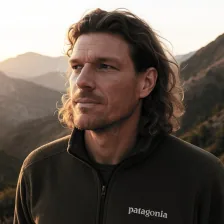
By Steven Keen
MSc candidate in Responsible Tourism Management, GSTC- and ICRT-certified.
21 min read Updated: Verified:
Regenerative tourism is an approach, grounded in living-systems thinking, that designs travel to leave the destination measurably better than it found it—restoring ecosystems, revitalizing cultures, and strengthening local economies—rather than merely minimizing harm. Where conventional tourism treats a destination as a collection of resources to be sold, the regenerative lens treats it as a living system whose health is the point.
It is not a certification, not a hotel category, and not a niche product—and this page treats it the way the network treats every emerging concept: defined precisely, sourced to the actual literature, and honest about its limits.
Key Takeaways
- Regenerative tourism designs travel to leave a place measurably better than it found it—restoring ecosystems, cultures, and local economies—not merely minimizing harm.
- It treats a destination as a living system whose health is the point, drawing on living-systems thinking and regenerative development.
- It sits beyond sustainable (hold the line) and responsible (reduce harm): the aim is to add net value.
- It is not a certification, a hotel category, or a niche product—and honest measurement frameworks are still maturing.
- Done well, it centers Indigenous and local knowledge rather than extracting it.
Where the Concept Comes From
The intellectual root is regenerative development in architecture and design, and it has a founding text: John Tillman Lyle’s Regenerative Design for Sustainable Development (1994), a landscape architect’s argument that human systems could be designed to renew their own sources of energy and materials the way ecosystems do—not merely deplete them more slowly.1 Bill Reed’s much-cited 2007 paper then framed the trajectory as a ladder: from doing less harm (“green”), through neutral (“sustainable”), to participating in the health of the whole living system (“regenerative”).2 Mang and Reed’s follow-up gave the movement its method—designing from place: development that begins from a specific living system’s own patterns and potential rather than importing a template3—and Hes and du Plessis’s Designing for Hope (2015) consolidated the worldview shift underneath it, from mechanistic thinking to living-systems thinking.4 Practitioner-thinkers—among them Anna Pollock, whose Conscious Travel work carried the idea into tourism—argued through the 2010s that travel was overdue for the same shift.
Academia caught up in a rush. The pandemic-era 2020 special issue of Tourism Geographies is the field’s founding moment: Ateljevic’s call to use the interruption to “transform the (tourism) world for good,”5 and Cave and Dredge’s argument that regeneration requires diverse economic practices beyond the growth model.6 Bellato, Frantzeskaki and Nygaard then gave the field its most-cited conceptual framework, defining regenerative tourism as tourism that develops the capacities of places, communities and their guests to operate in harmony with interconnected social-ecological systems.7
Two honest notes belong next to that history. First, the scholarship is young—a 2023 state-of-the-art review found the literature small, fast-growing, and still contesting its own definitions.8 Second, the deepest roots are not academic at all: regeneration as a duty of care for land and people is how many Indigenous cultures have organized stewardship for centuries—a debt the field itself increasingly acknowledges, and this page returns to below.
Regenerative vs. Sustainable—the Difference That Actually Matters
The two words are used interchangeably in marketing and mean different things in practice, and the difference is not a matter of ambition levels on the same scale—it is a change of question. Sustainability asks: how do we keep doing this without making things worse? Its logic is subtraction—less carbon, less waste, less damage—and its perfect score is zero: a tourism that leaves no trace. Regeneration asks: what does this place need in order to thrive, and can tourism help provide it? Its logic is contribution, its score is measured in positives—hectares restored, skills transmitted, incomes rooted—and its perfect score does not exist, because living systems are never finished.
Reed’s ladder makes the relationship precise: sustainability is the neutral point on a longer line, not the destination.2 The wider economics has moved the same way—Raworth’s doughnut model reframes the goal from “less harm to the planet” to “meeting the needs of all within the means of the planet,” a regenerative-and-distributive economy in which staying inside limits is the floor, not the achievement.9 Translated to a destination: a hotel that halves its water use is more sustainable; a hotel whose existence is the reason a watershed is being restored is regenerative. Both are better than the baseline. Only one changes the direction of the system.
Embed this graphic
Free to embed. The embed keeps a visible credit linking back to this page.
Two practical consequences follow. First, sustainability is auditable today and regeneration mostly is not: sustainability claims can be checked against a mature standard—the GSTC Criteria—while no equivalent certification yet exists for “regenerative,”10 which is why this site keeps repeating its three-question test (regenerating what, measured how, verified by whom). Second, the shift is as much mindset as method: Dredge’s analysis of the field argues that regenerative tourism requires transforming the mindsets and systems tourism runs on—not bolting a restoration project onto a business model built for extraction.11 A sustainability program can be a department. Regeneration is a redesign.
None of this makes “sustainable” a dirty word—on a warming planet, doing less harm is non-negotiable table stakes, and the network’s reference site on responsible tourism documents that foundation in depth. The regenerative claim begins where that foundation ends.
Regenerative vs. Sustainable Tourism: What’s the Difference?
The short answer, in one line: sustainable tourism asks how to visit without making a place worse; regenerative tourism asks what the place needs in order to thrive. That is a change of question, not a scoreboard—the two words name two goals on one ambition axis, not a winner and a loser. Both aim upward from the same baseline: sustainability sets the target at neutral—leave no trace—while regeneration sets it at net-positive—leave the place measurably better than you found it. On Reed’s trajectory the sustainable standard is the midpoint of a longer line, not its end.2
| Sustainable tourism | Regenerative tourism | |
|---|---|---|
| The question it asks | How do we do this without making the place worse? | What does this place need in order to thrive? |
| Its logic | Subtraction—less carbon, less waste, less damage. | Contribution—restored habitat, rooted income, living culture. |
| Where the bar sits | Neutral: leave no trace. A perfect score is zero. | Net-positive: leave it better. No perfect score exists. |
| How you measure it | Reduced impacts against a footprint baseline. | Positive outcomes on three ledgers: ecological, social, economic. |
| Can you verify it today? | Yes—auditable against the GSTC Criteria.10 | Not yet—no certifier, no agreed indicators. |
What sustainable tourism is genuinely better at. The comparison that flatters the newer word usually buries this, so state it plainly: sustainability is proven, certifiable, and scalable. It has a mature audit infrastructure, a generation of practice behind it, and a clear pass–fail an operator can act on Monday morning. Regeneration has the higher goal and the weaker proof—without agreed indicators or a certifier, most “regenerative” claims are still self-graded homework, and the field’s own scholars warn the word is being absorbed into marketing faster than into operations.6 Neither of those facts makes one word the winner. On a warming planet, doing measurably less harm is non-negotiable table stakes, not a consolation prize; regeneration begins where that floor is already held.9
So the honest frame is not a ranking but an axis: sustainable and regenerative name how high you aim—hold the line, or leave it better. What decides whether anyone actually climbs is the separate matter of responsibility, the decision to act at all. The network’s reference on responsible tourism seats the whole family of terms on that axis; this page carries the regenerative rung in full.
Their Own Good Intentions
THE CODE · FREE · NO EMAIL
Beyond Good Intentions
A regenerative trip is never promised into being—it is checked into existence. Eleven evidence-based pages that turn good intentions into questions you can book on. Free and yours to keep, from our companion site on ethical tourism.
Get the free codeThe Working Vocabulary
Eight terms carry the field’s weight. Each is stated here as this site uses it, with its origin—one place to check what a paper, a pitch deck, or this network means by its words.
- Regenerative development
- The parent discipline, from architecture and landscape design:1 designing human systems that renew the living systems they depend on. “Regenerative tourism” is this idea wearing travel’s clothes.
- Living-systems thinking
- The worldview underneath:4 a destination is not a stock of resources but a web of relationships—water, soil, people, culture, economy—whose health rises and falls together. The unit of design is the whole, not the hotel.
- Net positive
- The test: after the visit, on balance, more went back into the place’s living systems than was taken out—ecologically, socially, economically. An aspiration in most of tourism today, which is exactly why the measurement principle exists.
- Designing from place
- Mang and Reed’s method:3 development that starts from a specific place’s own patterns, story, and potential. The opposite of the template resort—and the reason no two honest regenerative projects look alike.
- Leakage & the local multiplier
- The economics of where the money goes: leakage is the share of visitor spending that exits to distant owners and importers; the multiplier is how many times a euro circulates locally before it leaves. Regeneration’s economic ledger is won or lost here.6
- FPIC
- Free, Prior and Informed Consent—the UNDRIP standard for any development touching Indigenous lands and cultures:12 consent given freely, before decisions, with full information. In regenerative practice it is a floor, not a courtesy.
- Kaitiakitanga
- The Māori concept of guardianship—responsibility for a place held across generations—that grounds New Zealand’s national visitor pledge and stands for the field’s oldest truth: Indigenous stewardship preceded the vocabulary by centuries.13
- Regenerative-washing
- The failure mode: “regenerative” as a premium re-label on unchanged operations—the risk the field’s own scholars flag most often.6 Antidote below, in the criticism section and principle 10.
Creating Conditions for Life to Thrive
The working definition turns on net positive impact: tourism designed so that, on balance, more goes back into the destination’s living systems than is taken out. The test applies on three ledgers at once—and it applies to them together: a project that shines on one ledger while quietly debiting another (the eco-lodge that restores a hillside and hollows out a housing market) has not passed the test, it has moved the cost between books. Regeneration is the rare claim that must be true three ways simultaneously:
Biological Regeneration
Does tourism leave the local ecosystem healthier—through funded habitat restoration, reforestation, or protection that would not otherwise be paid for?
Social Regeneration
Does tourism strengthen the community’s cohesion and capacity—reviving crafts, supporting local governance, building pride rather than resentment?
Economic Regeneration
Does the money stay and circulate locally, or leak out to distant owners? Local multiplier effects—and diverse, not purely extractive, economic forms6—are the measure.
The 10 Principles of Regenerative Tourism: A Framework for Healing
There is no official canon of regenerative-tourism principles—the field is too young for one.8 The ten below are this resource’s working synthesis of the research2 7 and practice literature, stated plainly so they can be argued with.
1. Place-Based and Context-Specific (The “Genius Loci”)
Regeneration cannot be cut-and-pasted. Every destination has a unique character and unique needs; a regenerative strategy for a desert community will look completely different from one for a coastal village on Crete. The design starts from the place, never from a template. On the ground this is Mang and Reed’s method3 doing its work: the first design deliverable is not a masterplan but a reading of the place—its watershed, its calendar, its story of itself—and the honest tell is variety. If an operator’s “regenerative” offer looks identical in Bali and on Crete, no place was consulted in its making.
2. Community-Led and Empowered
Locals are not just “stakeholders”; they are the rights-holders. They determine what is offered, what is off-limits, and how much is enough. Where Indigenous communities are involved, the bar is explicit: Free, Prior and Informed Consent.12 The practical test is who can say no—and have the no stick. A community that can veto a development, cap a visitor number, or close a site for a season is leading; a community that is “consulted” after the investment decision is scenery with a survey.
3. Reciprocity and Co-Creation
From a transactional economy to a reciprocal one: the traveler receives an experience and gives something real back—attention, respect, labor, or funds that stay. Reciprocity is also the principle that disciplines the other nine against sentimentality: it names an exchange, not a donation. The visitor is not a benefactor and the host is not a beneficiary—both are parties to a deal whose terms the place sets.
4. Ecological Restoration (Net Positive)
The aspiration runs past carbon-neutral: tourism revenue actively funding the recovery of degraded land and water. Aspiration is the honest word—verified net-positive operations are still rare, which is exactly why principle 10 exists. The credible versions are specific: a reserve funded by visitor fees that can name its hectares and species counts, a lodge whose levy pays for measured watershed restoration. The incredible versions are vibes with a green roof. The difference is always a number with a baseline under it.
5. Cultural Revitalization and Living Heritage
“Preservation” often freezes culture—the museum effect. Revitalization keeps it alive: supporting artisans who use traditional methods to make modern, useful things, so the skill stays economically viable for the next generation. The test of living heritage is the median age of its practitioners: a craft whose youngest master is seventy is being preserved into extinction. Tourism regenerates culture when it makes the old skill a viable living for a thirty-year-old—and merely consumes it when it pays for one more performance of decline.
6. Circular Economy Integration
Tourism operations that mimic nature’s cycles: waste from one process becomes input for another, and supply chains shorten until value stays where the visitors are. In destination terms: kitchen waste to compost to the garden that feeds the kitchen; graywater to the orchard; the menu written by the season rather than the importer. None of this is exotic—it is how the places tourists come to see functioned within living memory, which makes circularity less an innovation than a restoration of method.
7. Systems Thinking (Holistic View)
Everything is connected: you cannot fix the “tourism product” without touching water, transport, housing, and agriculture. A systems approach watches the feedback loops—how visitor numbers move rents, aquifers, and neighborly patience. It is also the principle that catches well-meant failure earliest: the celebrated guesthouse boom that quietly prices teachers out of the village, the trail whose popularity erodes the very solitude it sold. Systems thinking means owning the second-order effects of success, not just the first-order effects of intent.
8. Transformative Learning (The Inner Journey)
The destination is not the only thing regenerated; the traveler is too. A trip becomes a place to learn different ways of relating to land, time, and people—and the impact continues after the return flight. This is the principle regeneration shares with the network’s sister site on transformational tourism, and the boundary is kept clean: what changes in the traveler is that site’s subject; what the changed traveler does for places is this one’s. The two ledgers compound—a visitor who learned to see a landscape as alive votes, spends, and returns differently.
9. Collaboration and Radical Partnership
Regenerative destinations function like ecosystems: competitors cooperate to protect the commons their businesses depend on. The commons is the product: the aquifer, the trail network, the reef, the quiet. Every operator draws on it and no single operator can save it, which is why regenerative destinations end up building what look like guilds—shared standards, shared monitoring, shared restraint—and why a destination of brilliant individualists reliably degrades its own asset.
10. Measurement and Accountability (The Truth)
“Regenerative” is a claim about outcomes, so it must be measured—ecological indicators, community well-being, local economic circulation—and reported transparently. Without this principle, the other nine degrade into marketing. The traveler’s guide turns it into a vetting checklist. The full anatomy of honest measurement—baseline, three-ledger indicators, transparent reporting, independent verification—has its own section below, because this principle is the one the other nine answer to.
The Criticism, Taken Seriously
A young field earns trust by hosting its own opposition, so here are the five serious objections at full strength—three of them raised by the field’s own scholars, and the sharpest raised from outside it.
First: regenerative-washing. The word is being absorbed into marketing faster than into operations, and the field’s founding papers saw it coming—Cave and Dredge warned from the start that without changed economic practices, “regenerative” degrades into a premium re-label on the same extractive model.6 The objection is correct, and the honest response is structural, not rhetorical: a claim about outcomes is only as good as its measurement, which is why principle 10 outranks the other nine and why this site refuses the word wherever the three questions—regenerating what, measured how, verified by whom—come back blank.
Second: the verification gap. Sustainability has a mature audit infrastructure; regeneration has none—no certifier, no agreed indicators, no accreditation.10 Until that changes, every “regenerative” claim is self-graded homework. This is the field’s most fixable weakness and its most urgent one, and the interim discipline is set out in the measurement section below.
Third: the appropriation critique. If regeneration is substantially a Western re-vocabulary of Indigenous stewardship, then a field that cites kaitiakitanga in its brochures while the communities that carry such knowledge see neither authority nor revenue has not honored the lineage—it has extracted it, which would make the field’s founding gesture an instance of the problem it claims to solve. The floor here is not gratitude but consent and benefit: FPIC standards12 and revenue that reaches land rights and self-determination, as the Indigenous-roots section below spells out.
Fourth: the growth contradiction. The sharpest academic critique asks whether regenerative tourism can exist at all inside an industry whose destinations are governed by volume targets—more arrivals, more nights, more spend. Dredge’s answer is that it cannot, without transforming the mindsets and systems tourism runs on;11 Cave and Dredge’s is that it requires admitting economic forms the growth model does not count.6 Either way, the implication is uncomfortable and this site accepts it: a destination cannot regenerate its way out of an overtourism problem it refuses to cap. Regeneration is not a compensation scheme for volume—it is what becomes possible once volume is governed. Regeneration is not a compensation scheme for volume—it is what becomes possible when volume is governed.
Fifth: the degrowth challenge. The sharpest objection does not come from inside the field at all. A body of tourism scholarship argues that regeneration is a reformist frame—that by promising a better kind of tourism it lets the growth model survive the critique intact, and that what the evidence calls for is less tourism: planned, negotiated contraction of volume in the places that cannot carry it. Higgins-Desbiolles and colleagues make the case for “degrowing tourism” as a question of whom tourism is for, restoring the host community’s right to set limits rather than optimize throughput.14 Fletcher and colleagues set out tourism degrowth as a research and policy agenda rather than a slogan.15 This site does not treat the two as settled opposites—a capped, community-governed destination and a regenerative one often describe the same place—but the challenge stands where it bites: regeneration has no mechanism of its own for saying fewer. Every principle above can be honored at any volume. Where the answer to overtourism is a cap, the cap is the intervention, and regeneration is what you do inside it.
What Honest Measurement Actually Looks Like
Principle 10 deserves more than a sentence, because it is where the whole concept either becomes real or evaporates. Honest regenerative measurement has four parts, none optional. A baseline—the state of the watershed, the habitat, the wage structure, the housing market before the intervention; without it, every later number is an anecdote. Indicators on all three ledgers—ecological (habitat area, water quality, species counts), social (local employment quality, cultural transmission, resident sentiment), economic (local ownership share, multiplier, seasonality spread)—because a project that restores a wetland while displacing a neighborhood is not regeneration, it is accounting fraud between ledgers. Transparent reporting—published, dated, comparable year over year, failures included. And verification by someone with nothing to sell—a university partner, a conservation NGO, a statistical office; in its absence, the nearest available floor is certification against the GSTC Criteria plus published outcome data.10
The scaffolds that now exist—and what they actually count
For most of the field’s short life there was nothing above the operator to measure against. That is finally changing. Two real, destination-scale instruments now exist. The first is the UN’s Statistical Framework for Measuring the Sustainability of Tourism (SF-MST), adopted by the UN Statistical Commission in 2024—the first internationally agreed standard to fold tourism’s economic, environmental, and social effects into one national accounting system, extending the older Tourism Satellite Account onto the ecological and social ledgers.16 The second is the Global Destination Sustainability Index (GDS-Index), a destination-level benchmark that scores how far a place’s tourism strategy and its delivery have moved, its criteria aligned to the GSTC Destination standard and the UN Sustainable Development Goals.17 Between them they supply what a single hotel never could: a shared ledger at the scale of a country and a scorecard at the scale of a destination.
And yet—this is the part the enthusiastic write-ups skip—neither one measures regeneration. SF-MST accounts for tourism’s impacts: how much water, how much carbon, how many jobs, how much of the money stays local. That is the climb toward neutral—indispensable, and still a measure of harm reduced, not of a place left better. The GDS-Index goes further and even names the goal—it describes what it rewards as “regenerative strategy and implementation”17—but what it scores is process: the plans, policies, and programs a destination has put in place, not a baselined, verified, net-positive outcome on the ground. In the terms this page has used throughout, the mature infrastructure measures the distance up to zero; it does not yet measure the distance past it. That distance—contribution beyond neutral, evidenced on all three ledgers—is exactly what the four-part test above is for, and it is why this network keeps applying that test rather than pointing to a certificate that does not exist.
Until the field builds its own audit infrastructure, that four-part shape is the working test this network applies everywhere the word appears—not an official standard, but the honest overlay in its absence. The traveler’s version is a vetting checklist; the operator’s and the destination’s version—what a national tourism administration rebuilds when it starts counting a place’s health rather than only its arrivals, as New Zealand has begun to—is the spine of the business case. Applied to named programs whose results can be checked from outside, that discipline is what regenerative tourism in practice collects.
The Roots of Regeneration: Indigenous Wisdom
Much of what the literature now calls regenerative is a recent Western vocabulary for stewardship relationships Indigenous peoples have maintained for centuries—the Māori concept of kaitiakitanga (guardianship), which grounds New Zealand’s national visitor pledge,13 is the best-known living example. Honesty about that lineage carries obligations:
1. Acknowledgment
Recognizing the peoples who have cared for a landscape long before it became a destination.
2. Consent
Operating only with Free, Prior and Informed Consent (FPIC)—the standard set out in the UN Declaration on the Rights of Indigenous Peoples.12
3. Allyship
Directing revenue toward land rights and self-determination, not only toward experiences.
Crete has no Indigenous-rights question in the UNDRIP sense—but it has its own inherited stewardship knowledge: the dry-stone building craft that terraces its hillsides, inscribed by UNESCO in 2018 as Intangible Cultural Heritage of Humanity with Greece among the inscribing states,18 and the shepherds’ mitata of the high pastures. Treating that knowledge as living heritage rather than scenery is the local translation of this principle—explored in regenerative practices on Crete.
The difference between honoring a stewardship tradition and strip-mining it comes down to three observable things. Authorship—who tells the tradition’s story and in whose words; a knowledge system narrated exclusively by outsiders has already been taken. Terms—who decided what is shared, what is off-limits, and what it costs; sacred practice priced by a tour operator without the community’s governance is extraction wearing respect’s vocabulary. And flow—where the revenue lands; if the concept sells the trip and none of the money reaches the people who carry the concept, the lineage acknowledgment in the brochure is an unpaid invoice. Every “regenerative” offer that leans on traditional knowledge can be read against those three in about five minutes, which is precisely how long this site suggests spending before booking one.
The Honest Boundary: What “Regenerative” Does Not Yet Mean
Regenerative tourism is a young, contested concept, not a settled standard. The academic literature only consolidated after 2020 and is still debating definitions;8 no certification body currently verifies a “regenerative” claim the way GSTC criteria anchor sustainability claims; and the word is already being absorbed into marketing faster than into practice. Scholars warn explicitly against the term becoming a premium re-label for business as usual.6
This site’s position: the concept is worth defending precisely because it sets a testable bar—better off, measurably—and the correct response to the buzzword problem is principle 10, not cynicism. When a brochure says “regenerative,” the question is always: regenerating what, measured how, verified by whom?
One disambiguation, for the same reason: this site, regenerativetravel.org, is an independent educational resource. It is not affiliated with the commercial hospitality brand that operates at regenerativetravel.com; this site sells nothing and takes no bookings.
Letters from inside the question
The Other Side of Travel
The tourism industry is loud, crowded, and always trying to sell you something. These letters are the drive into the hills. A monthly dispatch exploring how to travel differently.
Read it before you decideCase Study: The Eden Project
The Eden Project is an educational charity that turned an exhausted industrial pit in Cornwall into a thriving living-systems destination—the page’s definition of regenerative made physically legible. It belongs here because it is the headline claim in one place you can stand in: a degraded site left measurably better than it was found, across the biological, social, and economic ledgers this page names. It is a credible authority because it is a registered educational charity with a documented origin story, not a resort borrowing the vocabulary.19
A place left measurably better
- The Eden Project opened on March 17, 2001 inside Bodelva, a 160-year-old, exhausted china clay pit near St Austell—a soil-less crater roughly 60 m deep—rebuilt into a complex of biomes housing thousands of plant species, including the world’s largest indoor rainforest.19
- It drew about 1.8 million visitors in its first year, anchoring a new visitor economy in a post-mining part of Cornwall—ecological, economic, and educational renewal on a single site.19
Built as a charity, for learning
- It is run by the Eden Trust, a registered educational charity (no. 1093070), whose stated mission is connecting people with the living world, regeneration, and education.19
What it proves—and its limit
What is externally verifiable is the transformation and its governance: the reclaimed Bodelva pit, the 2001 opening, the first-year visitor figure, and the Eden Trust’s registered-charity status are all documented on Eden’s own origins page and widely reported. Two honest qualifications. Eden is a built attraction, not a wild ecosystem restored in situ—it demonstrates designing from place and net-positive renewal on ground that had been stripped bare, which is a fair reading of “measurably better,” but the biomes are a made landscape, not a recovered one. And visitor numbers measure reach and economic anchoring, not by themselves ecological gain. So it proves the definition can be embodied at destination scale; it does not stand in for the harder, slower work of regenerating living systems that were never a quarry.
That is the definition with a postcode: a place found exhausted and left demonstrably richer—biologically, economically, and in what its visitors leave understanding—which is the whole of what this page means by regenerative.
Frequently Asked Questions
What is regenerative tourism?
What are the 10 principles of regenerative tourism?
How does regenerative tourism differ from sustainable tourism?
Is there a certification for regenerative tourism?
Where does the term “regenerative tourism” come from?
Steven spent a decade making documentaries in the places tourism forgets—with his work held in the archives of the UN’s International Labour Organization—before he went to live in one: a tiny mountain village on Crete. He is completing an MSc in Responsible Tourism Management, GSTC- & ICRT-certified, and the founder of CRETAN®, which serves as a case study. Read how these pages are edited.
Where to Go from Here
How to Travel Regeneratively
Turn the ten principles into trip decisions: vetting operators, choosing where and when to go, and protocols on the ground.
Soft Travel & Regeneration
The mindset the ten principles assume: why permeability rather than pace is the prerequisite for a trip that gives back.
The History of Regenerative Tourism
Who invented it, and when: a dated provenance—four independent streams that ran separately for decades and braided into a named field only around 2020.
Explore Our Companion Resources
- softtravel.com The traveler-side counterpart to this definition: soft travel names the unhurried state you’re in during a trip, not what the place gains. (opens in new tab)
- transformationaltourism.com The third ledger defined: where regeneration measures what a place gains, transformational tourism means durable change in the traveler afterward. (opens in new tab)
- responsibletourism.com The tradition regeneration grew from: the Cape Town definition, seven core principles, and how responsible differs from sustainable travel. (opens in new tab)
References
- Regenerative Design for Sustainable Development — Lyle, J. T. Wiley, 1994. ISBN 9780471178439—the founding text of regenerative design, from landscape architecture. https://openlibrary.org/isbn/9780471178439 (accessed August 14, 2026). ↩
- Shifting from ‘sustainability’ to regeneration — Reed, B. Building Research & Information 35(6), 2007, pp. 674-680. https://doi.org/10.1080/09613210701475753 (accessed August 14, 2026). ↩
- Designing from place: a regenerative framework and methodology — Mang, P. & Reed, B. Building Research & Information 40(1), 2012, pp. 23-38. https://doi.org/10.1080/09613218.2012.621341 (accessed August 14, 2026). ↩
- Designing for Hope: Pathways to Regenerative Sustainability — Hes, D. & du Plessis, C. Routledge, 2015. ISBN 9781138800618. https://openlibrary.org/isbn/9781138800618 (accessed August 14, 2026). ↩
- Transforming the (tourism) world for good and (re)generating the potential ‘new normal’ — Ateljevic, I. Tourism Geographies 22(3), 2020, pp. 467-475. https://doi.org/10.1080/14616688.2020.1759134 (accessed August 14, 2026). ↩
- Regenerative tourism needs diverse economic practices — Cave, J. & Dredge, D. Tourism Geographies 22(3), 2020, pp. 503-513. https://doi.org/10.1080/14616688.2020.1768434 (accessed August 14, 2026). ↩
- Regenerative tourism: a conceptual framework leveraging theory and practice — Bellato, L., Frantzeskaki, N. & Nygaard, C. A. Tourism Geographies 25(4), 2023, pp. 1026-1046. https://doi.org/10.1080/14616688.2022.2044376 (accessed August 14, 2026). ↩
- Regenerative tourism: a state-of-the-art review — Bellato, L. & Pollock, A. Tourism Geographies 27(3-4), 2023, pp. 558-567. https://www.tandfonline.com/doi/full/10.1080/14616688.2023.2294366 (accessed August 14, 2026). ↩
- Doughnut Economics: Seven Ways to Think Like a 21st-Century Economist — Raworth, K. Random House, 2017. ISBN 9781847941374—the “safe and just space” frame: meeting the needs of all within the means of the planet. https://openlibrary.org/isbn/9781847941374 (accessed August 14, 2026). ↩
- GSTC Criteria — Global Sustainable Tourism Council—the baseline standard sustainability claims can be verified against; no equivalent standard yet exists for “regenerative.” https://www.gstc.org/gstc-criteria/ (accessed August 14, 2026). ↩
- Regenerative tourism: transforming mindsets, systems and practices — Dredge, D. Journal of Tourism Futures 8(3), 2022, pp. 269-281. https://doi.org/10.1108/JTF-01-2022-0015 (accessed August 14, 2026). ↩
- United Nations Declaration on the Rights of Indigenous Peoples (UNDRIP) — United Nations, 2007—the basis of Free, Prior and Informed Consent (FPIC). https://www.un.org/development/desa/indigenouspeoples/declaration-on-the-rights-of-indigenous-peoples.html (accessed August 14, 2026). ↩
- Tiaki—Care for New Zealand — New Zealand’s national visitor pledge, grounded in kaitiakitanga (guardianship). https://www.tiakinewzealand.com/ (accessed August 14, 2026). ↩
- Degrowing tourism: rethinking tourism — Higgins-Desbiolles, F., Carnicelli, S., Krolikowski, C., Wijesinghe, G. & Boluk, K. Journal of Sustainable Tourism 27(12), 2019, pp. 1926-1944—argues for degrowing tourism as a redistribution of whom tourism is for, restoring the host community’s right to set limits. https://doi.org/10.1080/09669582.2019.1601732 (accessed August 14, 2026). ↩
- Tourism and degrowth: an emerging agenda for research and praxis — Fletcher, R., Murray Mas, I., Blanco-Romero, A. & Blázquez-Salom, M. Journal of Sustainable Tourism 27(12), 2019, pp. 1745-1763—sets out tourism degrowth as a research and policy agenda rather than a slogan. https://doi.org/10.1080/09669582.2019.1679822 (accessed August 14, 2026). ↩
- Statistical Framework for Measuring the Sustainability of Tourism (SF-MST) — UN Tourism (UNWTO) & UN Statistics Division—adopted by the UN Statistical Commission at its 55th session (2024) as the first internationally agreed statistical standard for tourism’s sustainability, extending the 2008 Tourism Satellite Account across economic, environmental, and social dimensions. https://www.untourism.int/tourism-statistics/statistical-framework-for-measuring-the-sustainability-of-tourism (accessed August 14, 2026). ↩
- Global Destination Sustainability Index (GDS-Index) — GDS-Movement—a destination-level benchmark that scores a place’s “regenerative strategy and implementation,” its criteria guided by the ISEAL Code of Good Practice and aligned to the GSTC Destination Criteria and the UN SDGs. https://www.gds.earth/ (accessed August 14, 2026). ↩
- Art of dry stone walling, knowledge and techniques — UNESCO Representative List of the Intangible Cultural Heritage of Humanity, 2018 (Greece among the inscribing states). https://ich.unesco.org/en/Decisions/13.COM/10.b.10 (accessed August 14, 2026). ↩
- Our origins—Eden Project (Eden Trust, registered charity 1093070) — Eden Project / Eden Trust—opened March 17, 2001 in the reclaimed Bodelva china-clay pit near St Austell, Cornwall; about 1.8 million visitors in its first year. https://www.edenproject.com/mission/origins (accessed August 14, 2026). ↩
Further Reading
- Resources: Regenerative Development & Design (foundational articles by Pamela Mang & Bill Reed)
Pamela Mang, Bill Reed et al. · 2012 · Regenesis Group
- What is regenerative tourism, and how can it be implemented?
EarthCheck (referencing David G. Simmons) · 2023 · EarthCheck
- The Doughnut Destination: applying Kate Raworth’s Doughnut Economy perspective to rethink tourism destination management
Stefan Hartman & Jasper Hessel Heslinga · 2023 · Journal of Tourism Futures (Emerald)
- About Doughnut Economics
Kate Raworth / DEAL · 2020 · Doughnut Economics Action Lab (DEAL)
- Kaitiakitanga: Guardianship of Southland
Great South · 2023 · Great South (Southland, New Zealand)
Our Editorial Standards
This is an independent resource, written and maintained by Steven Keen—a responsible tourism practitioner based on Crete, completing an MSc in Responsible Tourism Management and certified by the GSTC and ICRT. Every statistic is cited to its primary source, every page carries an honest last-updated date, and where a figure cannot be verified, we flag it—rather than guess. Seasonal claims are re-checked on the island as the seasons turn, and every reference carries the date it was last accessed. We disclose our connection to CRETAN®, which serves as a documented case study. Nothing here is sponsored, and the site sells nothing and takes no bookings. Claims that expire carry a review date, and this site cannot be published after that date passes until the claim has been re-read. The ten principles are this resource’s working synthesis of a young, contested literature, and are labeled as such rather than passed off as canon. Read our full editorial standards.