Soft Travel: The Mindset Shift Required for Regeneration
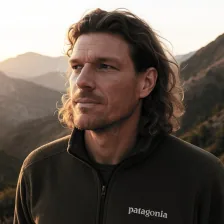
By Steven Keen
MSc candidate in Responsible Tourism Management, GSTC- and ICRT-certified.
9 min read Updated: Verified:
While “Slow Travel” focuses on speed, Soft Travel focuses on texture. It is about permeability. The “Hard” traveler is encased in a bubble; the “Soft” traveler is open enough that the place actually reaches them—its signals, its rhythms, its needs.1 (Whether a journey durably changes the traveler is a different question with its own site: transformational tourism. This page needs only the state: attention, arrived.)
Soft Travel (Mindset) + Ecological Action (Method) = Regenerative Tourism (Outcome)
Soft travel has its own full treatment—definition and origins, and the psychology with its evidence—by the same author. This page covers the half that belongs here: why that mindset is regeneration’s precondition.
Key Takeaways
- Soft travel is about permeability, not just pace—an openness that lets a place actually reach the traveler, which is the mindset regeneration presupposes.
- The equation is simple: soft travel (mindset) plus ecological action (method) equals regenerative tourism (outcome)—you cannot regenerate a system you never slowed down enough to understand.
- Softness unlocks the three capacities regeneration runs on—observation, empathy, and integration—and all three are downstream of one scarce resource: recovered attention.
- Every core soft-travel behavior is already a regenerative method under another name: staying put is the local multiplier, walking is observation, eating in season is the shortest supply chain.
- The hub-and-spoke model puts it into practice—base in one village for two weeks and take day trips as spokes—so spend and relationships concentrate on a single community instead of scattering across a three-city sprint.
Why Softness Is a Prerequisite for Regeneration
You cannot regenerate a system you do not understand.2 And you cannot understand a system at 100 km/h.
Observation
Soft travel gives you time to notice that the bees are missing or the soil is dry. Rushing blinds us to the subtle signs of ecological distress.
Empathy
A rushed traveler has no attention left over for connection; an unhurried one does—and connection is what regenerative participation is built from.
Integration
White space in an itinerary allows for unexpected connections—an invitation to a village wedding, a conversation with a shepherd, a moment of stillness.
Notice what the three capacities have in common: none of them can be purchased, packaged, or accelerated, and all three are downstream of the same scarce resource—recovered attention.3 A depleted traveler is not a bad person; they are simply blind in the specific way depletion makes everyone blind, scanning for relief instead of noticing what a place is quietly saying about itself. That is why the sequence runs mindset first, method second: soft travel’s whole discipline (one base, unhurried days, the evidence-backed restoration that softtravel.com documents) is what turns a visitor back into an instrument sensitive enough for regeneration’s work to register on.
Their Own Good Intentions
THE CODE · FREE · NO EMAIL
Beyond Good Intentions
A regenerative trip is never promised into being—it is checked into existence. Eleven evidence-based pages that turn good intentions into questions you can book on. Free and yours to keep, from our companion site on ethical tourism.
Get the free codeFrom Mindset to Method—the Same Moves, Two Ledgers
What makes the two practices compound rather than merely coexist is that every core soft-travel behavior is already a regenerative method wearing its inner-facing name. Staying long in one place is, on soft travel’s ledger, how attention recovers; on this site’s ledger it is the local multiplier—spend concentrated where it circulates.4 Walking is soft travel’s restoration instrument; walked slowly with eyes open, it is this site’s observation instrument, down to the citizen-science apps in the traveler’s guide. Eating from the market because the season tastes better is softness; it is also the shortest supply chain in the destination. Traveling in the quiet months for the quiet is softness; it is also the seasonality dividend, delivered personally.
One trip · itemized
Good for you. Good for the village. Free.
Net cost of all four moves: €0—you may even save.
Cost is €0 by construction—a count of four free moves, not a measured euro. The smart move and the good move are the same move.
Embed this graphic
Free to embed. The embed keeps a visible credit linking back to this page.
The traveler does not need to run both ledgers consciously—that is the design’s elegance. Choose the soft version of a trip for entirely self-interested reasons (rest, texture, the better tomatoes) and the regenerative outcomes largely follow, because the behaviors are the same behaviors. The reverse is also true, and worth saying plainly: there is no regenerative method that runs at itinerary speed. A traveler who wants to give something back but plans like a checklist will fail at it gently and predictably—not from bad faith, but because contribution requires the noticing that speed forecloses.
What Fades, and What Remains
The three sites in this corner of the network divide cleanly along one axis: what survives the trip’s end, and where. Soft travel is honest about its product’s shelf life—restoration is real and it fades within weeks of returning home;5 the state must be renewed, which is why softtravel.com teaches having it well and often. Transformational tourism is the claim that something can persist in the traveler—a changed frame, a different Tuesday. And this site holds the third answer, the one with the least metaphysics in it: what a trip leaves in the place persists on its own terms, regardless of what happens inside anyone. The wall repaired holds the hillside whether or not the visitor remembers the afternoon; the observation logged stays in the scientific record; the winter income that kept a family in the village keeps compounding after the guest has forgotten the village’s name.
That is regeneration’s quiet advantage in the network’s economy of promises: it is the only ledger whose entries do not depend on memory. A soft trip must be repeated; a transformation must be integrated; a hectare restored simply stands there. Which is also why this site keeps its sibling links so prominent—the restored traveler notices more, the transformed traveler gives more, and the place banks whatever either of them deposited. Three ledgers, one journey, and no entry wasted.
The “Hub and Spoke” Model
The Anti-Pattern
1 night Chania, 1 night Rethymno, 1 night Heraklion.
High carbon, high stress, zero depth. You see everything but understand nothing.
The Regenerative Model
Renting a traditional stone house in a village like Vamos for two weeks (The Hub).
You become a temporary citizen. Your spend is concentrated, creating a net positive impact on one community.
The spokes matter as much as the hub, and they answer the obvious objection—won’t I miss the island? From a two-week base, everything the three-city sprint promised is still reachable as a day’s outing: the gorge, the famous harbor, the archaeological site. The difference is the return leg. The sprint traveler checks out each morning; the hub traveler comes home each evening—to the same table, the same greetings, the growing pile of small recognitions that turn a destination into a relationship. The spokes see the sights; the hub does the regenerating; and the model’s real discovery is that the two never needed to compete.
Put the whole essay in one sentence: softness is how a traveler becomes accurate enough to help. The rest of this site is what helping looks like once you are—starting with the practical guide, and, where the helping matures into a question about your own life, handing you across to transformational tourism’s territory with both ledgers still open.
Letters from inside the question
The Other Side of Travel
The tourism industry is loud, crowded, and always trying to sell you something. These letters are the drive into the hills. A monthly dispatch exploring how to travel differently.
Read it before you decideCase Study: Fundación Rewilding Argentina
Fundación Rewilding Argentina is an Argentine conservation foundation, spun out of Tompkins Conservation, that restores degraded ecosystems and rebuilds gateway-town economies around slow, low-impact wildlife tourism. It belongs on a page about the bridge from soft travel to regeneration because it is that bridge made literal: a single gateway community, visited slowly and deeply, becomes the engine that regenerates both an ecosystem and a local economy. It is a credible authority because it works in formal partnership with Argentina’s national parks administration and the province of Corrientes, and its outcomes are documented rather than asserted.6
The ecosystem, restored
- In 2018 Argentina established Iberá National Park on land donated by the foundation’s parent organization, Tompkins Conservation.6
- By late 2023 the foundation’s jaguar reintroduction had restored a free-ranging population of at least 20 jaguars in Iberá—the region’s first in roughly 70 years, and its flagship low-impact wildlife-tourism draw.6
The gateway town, revived
- Since the park’s creation, nature tourism has begun to reverse the decline of the gateway town Colonia Carlos Pellegrini, which had shrunk to roughly 500 residents—about a quarter of its former size—as people left for city jobs.6
- In 2017 the foundation launched its “Cooks of Iberá” program, training around 130 cooks across 10 gateway communities to seed a local nature-tourism economy.6
- It operates the Rincón del Socorro ecolodge as a proof-of-concept for wildlife tourism, employing about 30 people, roughly 80% of them local.6
What it proves—and its limit
The ecological and economic facts here are concrete and dated—a national park established (2018), around 130 cooks trained (2017), at least 20 wild jaguars by late 2023—and they are verifiable through Re:wild’s reporting; the foundation’s own figures corroborate but sit behind a story the foundation is itself telling. Two honest limits. The jaguar count is a point-in-time figure for a young, still-fragile reintroduction, not a settled population. And one gateway town’s revival is a real result at one place, not evidence that wildlife tourism reliably rescues rural economies—the model works here, under a specific partnership, on donated land. Read it as the strongest kind of soft-travel case: measurably net-positive so far, at one address, still being written.
That is the bridge this page keeps pointing at—soft, slow, place-based travel that leaves the host place measurably better rather than merely less harmed—standing in one Argentine wetland, with jaguars back in it and a town filling up again.
Frequently Asked Questions
What is the difference between soft travel and slow travel?
Is soft travel the same as regenerative tourism?
What is the hub-and-spoke model?
Won’t I miss most of the destination if I stay in one place?
How long do the benefits of a soft trip last?
Steven spent a decade making documentaries in the places tourism forgets—with his work held in the archives of the UN’s International Labour Organization—before he went to live in one: a tiny mountain village on Crete. He is completing an MSc in Responsible Tourism Management, GSTC- & ICRT-certified, and the founder of CRETAN®, which serves as a case study. Read how these pages are edited.
This page is an editorial essay—the connective argument between two documented resources. Its lineage sources are listed above; the fuller empirical case for each claim lives on the pages it links: soft travel’s restoration evidence at softtravel.com, regeneration’s sources across this site.
Where to Go from Here
What Is Regenerative Tourism?
The place-side ledger in full: the definition, ten principles, and the honest boundary of what regeneration claims.
How to Travel Regeneratively
The method this mindset feeds: vetting operators, protocols on the ground, and the long tail after you return.
Regenerative Tourism on Crete
The hub-and-spoke model on a real island: villages, groves, and a regenerative week sketched day by day.
Explore Our Companion Resources
- softtravel.com The mindset’s home ground: soft travel defined in full—origins, evidence, and the unhurried state it creates during a trip. (opens in new tab)
- transformationaltourism.com The same bridge, other destination: how the soft state becomes the precondition for durable change in the traveler after the trip. (opens in new tab)
- responsibletourism.com The wider practice this page sits inside: responsible tourism defined in full—what it asks of a trip, and the evidence under the asking. (opens in new tab)
References
- The Holiday Makers: Understanding the Impact of Leisure and Travel — Krippendorf, J. Routledge, 1987 (reissued 2009)—the founding critique of hard, industrial tourism and the case for a gentler, more permeable way of traveling that this page’s hard/soft distinction descends from. https://www.taylorfrancis.com/books/mono/10.4324/9780080939032/holiday-makers-jost-krippendorf (accessed August 14, 2026). ↩
- Shifting from “Sustainability” to Regeneration — Reed, B. Building Research & Information 35(6), 2007, pp. 674–680—the foundational statement of regeneration as participation with a place’s living systems, understood on their own terms, rather than merely doing less harm. https://doi.org/10.1080/09613210701475753 (accessed August 14, 2026). ↩
- The Restorative Benefits of Nature: Toward an Integrative Framework — Kaplan, S. Journal of Environmental Psychology 15(3), 1995, pp. 169–182—Attention Restoration Theory: directed attention is a finite resource that depletes with sustained effort and recovers in restorative settings. https://doi.org/10.1016/0272-4944(95)90001-2 (accessed August 14, 2026). ↩
- Regenerative tourism needs diverse economic practices — Cave, J. & Dredge, D. Tourism Geographies 22(3), 2020, pp. 503–513—regeneration runs on enterprise forms that keep value circulating within the host community, the mechanism behind the local multiplier. https://doi.org/10.1080/14616688.2020.1768434 (accessed August 14, 2026). ↩
- Do We Recover from Vacation? Meta-analysis of Vacation Effects on Health and Well-being — de Bloom, J. et al. Journal of Occupational Health 51(1), 2009, pp. 13–25—a break measurably improves health and well-being, but the gains fade out within roughly the first week back at work. https://doi.org/10.1539/joh.K8004 (accessed August 14, 2026). ↩
- Rewilding awakens local businesses as wildlife tourism booms near one of Argentina’s largest protected areas — Re:wild (Fundación Rewilding Argentina)—Iberá National Park established 2018; the Cooks of Iberá program (2017, ~130 cooks across 10 gateway communities); at least 20 free-ranging jaguars restored in Iberá by late 2023. https://www.rewild.org/blog/rewilding-awakens-local-businesses-as-wildlife-tourism-booms (accessed August 14, 2026). ↩
Further Reading
- Regenerative Development and Design: A Framework for Evolving Sustainability
Pamela Mang, Ben Haggard & Regenesis Group · 2016 · John Wiley & Sons
- The Experience of Nature: A Psychological Perspective
Rachel Kaplan & Stephen Kaplan · 1989 · Cambridge University Press
- Regenerative Design for Sustainable Development
John Tillman Lyle · 1994 · John Wiley & Sons
- Regenerative tourism: transforming mindsets, systems and practices, Journal of Tourism Futures 8(3), pp. 269-281
Dianne Dredge · 2022 · Emerald Publishing
- The Holiday Makers: Understanding the Impact of Leisure and Travel
Jost Krippendorf · 1987 · Heinemann, London (English translation of Die Ferienmenschen, 1984)
Our Editorial Standards
This is an independent resource, written and maintained by Steven Keen—a responsible tourism practitioner based on Crete, completing an MSc in Responsible Tourism Management and certified by the GSTC and ICRT. Every statistic is cited to its primary source, every page carries an honest last-updated date, and where a figure cannot be verified, we flag it—rather than guess. Seasonal claims are re-checked on the island as the seasons turn, and every reference carries the date it was last accessed. We disclose our connection to CRETAN®, which serves as a documented case study. Nothing here is sponsored, and the site sells nothing and takes no bookings. Claims that expire carry a review date, and this site cannot be published after that date passes until the claim has been re-read. The ten principles are this resource’s working synthesis of a young, contested literature, and are labeled as such rather than passed off as canon. Read our full editorial standards.