How to Travel Regeneratively: From Consumer to Steward
To travel regeneratively is to accept a new responsibility. It moves us away from the passive “consumer” mindset—where we expect to be served—toward an active “stewardship” mindset—where we serve the destination as much as it serves us.
This page is the practice manual: how to choose where to go at all, vet before booking, get there honestly, participate on the ground, spend like it matters, audit your own trip, and keep the relationship alive afterward. Every check in it can be run by one person with no expertise—and each one costs minutes, not virtue.
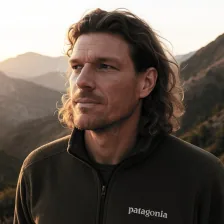
By Steven Keen
MSc Responsible Tourism Management (in progress), GSTC- and ICRT-certified
19 min read Updated on Sources verified on
Pre-Trip Vetting: The “Greenwashing” Filter
Most travelers say they want to travel more sustainably; far fewer manage to act on it, and the industry’s own research documents that gap honestly.[1] The filter below exists to close it: five checks you can run on any operator before booking, no expertise required. Where an operator carries certification, verify that the certifying scheme itself is credible—the GSTC Criteria are the baseline standard to check against.[2]
1. Ownership & Economic Leakage
Red Flag
Large multinational chains where profits leave the country.
Regenerative Choice
Locally owned cooperatives where profit stays in the community.
2. The “Net Positive” Evidence
Red Flag
Vague terms like “eco-friendly” without numbers.
Regenerative Choice
Metric-driven impact (e.g., “We restored 5 hectares”).
3. Supply Chain Transparency
Red Flag
Buffets with imported tropical fruits.
Regenerative Choice
Menus based strictly on what is in season within a 50 km radius.
4. Community Agency
Red Flag
Locals only in service roles.
Regenerative Choice
Community ownership or revenue sharing models.
5. Limits & Restraint
Red Flag
“Groups of any size, every day, year-round.”
Regenerative Choice
Published caps: group sizes, closed seasons, sites deliberately off the program.
The fifth check deserves a sentence of explanation, because it is the least intuitive and the most diagnostic: an operator who can tell you what they refuse to do is showing you their governance. “We don’t run the gorge in nesting season,” “we cap walks at eight,” “we don’t photograph the village festival”—every such sentence costs the operator revenue and buys the place slack, which is precisely the trade regeneration consists of. An offer with no refusals in it has no relationship with the place’s limits, whatever its vocabulary.
Running the filter takes about fifteen minutes per operator, and it is mostly reading: the About page (who owns this?), the menu or program (where does this actually come from?), the impact page if one exists (numbers with baselines, or adjectives?), and one email if anything is unclear—honest operators answer specifics gladly, because they are the only marketing that costs their competitors something. Two practical notes: absence of certification is not damning (small family operations rarely can afford audits—check ownership and evidence instead), and presence of the word “regenerative” is worth nothing at all. The filter tests behavior. Words are what the filter exists to get past.
Getting There: The Ledger Starts Before Arrival
No on-the-ground virtue outweighs an ignored journey. On European Environment Agency figures, rail averages 33 gCO₂e per passenger-kilometer against 160 for flying (EU-27, well-to-wheel)[3] —a factor of roughly five before non-CO₂ effects at altitude are counted. The regenerative playbook that follows from the arithmetic has three moves, in order of leverage:
- Travel less often, for longer. One three-week stay beats three one-week trips on every line of the ledger—emissions, money kept local, and depth of engagement.
- Go overland where geography allows. Within a continent, the train is usually the regenerative default; treat the itinerary as part of the trip rather than dead time to minimize.
- Where the flight is unavoidable—an island is an island—make it count. Stay longer, spend deeper into the local economy, and let one flight carry a season’s worth of engagement rather than a long weekend’s.
Offsets are deliberately not on that list: they are an accounting instrument of last resort, not a license, and no offset turns a harm into a restoration.
Choosing Where—and When—to Go at All
The most leveraged regenerative decision is made before any operator is vetted: which living system receives you, and in what season. The same traveler, spending the same money with the same care, is a burden in one place and a lifeline in another. A honeypot destination in peak season experiences an additional visitor as load—on the aquifer, the housing market, the residents’ patience; a village whose guesthouses stand empty ten months a year experiences the same visitor as the difference between a bakery that survives the winter and one that does not.
Three questions do the sorting. Is tourism scarce or saturating here? Prefer the region the guidebook gives a paragraph over the one it gives a chapter—scarcity of visitors is where a visitor’s value is highest. Does my timing spread the load or spike it? The shoulder and working seasons deliver the same landscape with the economics reversed: your money arrives when the community actually needs it, and the destination has attention to spare for you (the seasonality arithmetic is laid out in the business case). Is anyone here asking for visitors? Communities signal: agritourism cooperatives, village festivals open to outsiders, restoration projects with participation days. An invitation is the strongest regenerative signal there is—and its absence, in places already saturated, is one too.
None of this means abandoning beloved places. It means arriving in their off-season, staying in their overlooked interior, and letting the famous coast subsidize the unfamous hinterland through you—the pattern the Crete page works through on one island in detail.
Hands in the Soil: Participation That Actually Helps
Between ordinary tourism and full volunteering lies the most regenerative category of travel available to a private person: structured participation—frameworks where a visitor’s hands and attention flow into a living system on the system’s own terms, with the extraction risks designed out.
The farm exchange. WWOOF—World Wide Opportunities on Organic Farms—is the oldest working model: visitors participate in the daily life of organic farms in exchange for meals, lodging, and an education in how the landscape actually works, with no money changing hands in either direction.[4] WWOOF Greece lists host farms across the country, including on Crete—olive groves, permaculture projects, mountain smallholdings. Read the design correctly: it is not “free labor for a free bed” but a reciprocity structure—the farmer teaches, the visitor works, the food comes from the ground both are standing on. A fortnight inside that exchange delivers more genuine regenerative participation than a year of careful consumer choices.
The observation economy. Citizen science turns the tourist’s default activity—looking at things—into a contribution. On iNaturalist, an independent nonprofit whose research-grade observations flow into the global biodiversity databases science actually uses,[5] a traveler photographing a roadside orchid is, with two taps, extending the documented record of a species. The practice costs nothing, requires no expertise (the community handles identification), and quietly retrains the visitor’s eye from scenery to system—which is the inner shift the whole field turns on.
The working invitation. Harvests are the open door: olives, grapes, and the rest of the Mediterranean calendar run on short bursts of many hands, and a guest who shows up reliable and teachable is genuinely useful in a way tourism almost never permits. These invitations are not booked; they are earned by being present, based somewhere long enough to be known, and honest about what your hands can do. The rule that keeps all three models clean is the same: you are the student, the place is the teacher, and the work would exist without you. The moment any of those inverts—the work manufactured for your experience, the community performing need—you have crossed into the voluntourism territory the gate below guards.
On The Ground: Protocols of Engagement
Protocol A: Ecological Interventions (Active Restoration)
Citizen Science
Use apps like iNaturalist to catalogue biodiversity on Crete’s White Mountains, or join a snorkel survey over the Posidonia seagrass meadows whose carbon storage Greek marine science actively studies.[6] Every observation adds to the scientific record and helps inform conservation priorities.
The “One Hour” Rule
Dedicate one hour daily to active improvement—beach cleanup, repairing a dry-stone wall (a UNESCO-inscribed craft on this site’s own island[7] ), cataloging plant species, or helping a local farmer with harvest.
Protocol B: Cultural Humility & Reciprocity
The Guest Mindset
You are entering someone’s home. Act with deference. The village square is not a stage—it is a living room.
Language
Learning basic local words is a signal of respect. In Crete, a simple “Kalimera” (good morning) or “Efcharisto” (thank you) transforms interactions.
Photography Consent
Never treat locals as “scenery.” Always ask. A genuine conversation before a photo creates connection; a stolen snapshot creates distance.
Protocol C: Radical Resource Conservation
Water Consciousness
In the Mediterranean, water is life. Use “Navy showers”—wet, soap, rinse. Ask hotels about their water management practices.
Energy Descent
Live with the rhythm of the sun to reduce electricity consumption. Rise at dawn, rest at midday, enjoy evenings by candlelight.
Waste Travels With You
Small islands and mountain villages pay to ship their waste out—every bottle you import becomes their logistics problem. Arrive with a refillable, refuse the single-use where a refusal is possible, and carry out what you carried in on trails and beaches, plus one item that isn’t yours.
Protocol D: The Digital Footprint
Geotag Like a Steward
A precise geotag on a fragile place—the untouched cove, the rare orchid’s hillside, the shepherd’s spring—is infrastructure for the crowd that will degrade it. Tag the region, not the coordinates; let the place keep its finding-cost, because the finding-cost was protecting it.
Review as Redistribution
Reviews steer tomorrow’s visitors, which makes them a stewardship instrument: write the detailed, honest review for the family guesthouse and the small producer—where one review moves a season’s bookings—and let the saturated highlights survive without your amplification.
Measuring Your Own Trip—the Personal Three-Ledger Audit
This network holds destinations and operators to a measurement standard (baseline, indicators, transparency, verification), and intellectual honesty applies the same discipline to the traveler. The personal version takes one evening at the end of a trip and one rule: grade artifacts, not feelings. “I felt connected to the community” is a mood; the audit wants receipts, photographs, and names.
- The economic ledger: pull up your actual spending and sort it—what share went to locally owned hands (the family guesthouse, the market, the guide) versus platforms, chains, and importers? No target is prescribed; the act of counting is the instrument, and most travelers who count once never book the same way again.
- The ecological ledger: the honest transport total (the flight counted, not amortized into vagueness), set against the hours of participation—observations logged, walls repaired, harvests helped, cleanups joined. Most trips run this ledger at a loss. Knowing the size of the loss is what makes the next trip’s design serious.
- The social ledger: the hardest to fake—names you know and are known by, invitations received, skills or words that came home with you, and the one that predicts return visits: whether anyone there would notice if you never came back.
The audit’s output is not a grade; it is the next trip’s brief. A poor economic ledger books differently next year; an empty social ledger argues for one base instead of five stops; an ecological ledger deep in the red is how “less often, longer, overland” stops being this page’s advice and becomes your own conclusion.
Where You Sleep Is Where Your Money Sleeps
Accommodation is most trips’ largest line item, which makes it the largest single vote you cast in the destination’s economy—and the choice is less about category than about whose balance sheet the night lands on. The family guesthouse and the farm stay put your night directly into a local household that spends it at the village shop; the international chain routes most of it to owners and suppliers who have never seen the place; the anonymous short-let apartment is the ambiguous middle—sometimes a family’s income, sometimes a portfolio’s, and the listing rarely tells you which. The research behind this is the diverse-economies argument at the field’s foundation: regeneration runs on enterprise forms that keep value circulating in place.[8]
The regenerative hierarchy, roughly: stays that produce something (the agritourism farm where your night funds the olive grove’s maintenance and your breakfast is its output) > stays owned by the people who greet you (the guesthouse whose owner’s name you learn on arrival) > stays that at least employ and buy locally (askable questions, and honest hotels answer them) > stays that are extraction with beds. Two questions sort almost any listing into that hierarchy: who owns this? and where does breakfast come from? If neither can be answered from the website plus one email, the answer is the bottom tier.
And one uncomfortable honesty the field owes its readers: in housing-squeezed destinations, the visitor bed and the resident home compete for the same walls. A traveler cannot solve that from a booking screen—but choosing hosts who live on site or in town, in buildings that were guest quarters rather than converted homes, at least stops your night from being the reason a local’s lease wasn’t renewed. Where a destination has said it is full—some now do—believe it, and take the hint the choosing-where section above turned into a method.
Eating as Ecosystem Participation
Three meals a day, every day of the trip: no other regenerative instrument is used this often, and none is easier to read. A menu is a supply chain wearing a tablecloth. The taverna whose list changes with the season, runs out of things, and names its producers is telling you its kitchen buys within sight of the table; the laminated menu with two hundred items and a photograph of every dish, identical in May and November, is telling you about its freezer and the import truck. Choosing the first over the second, twice a day for two weeks, moves real money from the logistics economy into the landscape’s.
The practice, concretely: eat what the landscape grows, when it grows it—the seasonal vegetable over the greenhouse tomato in January, the local catch honestly declared over the “fresh” seafood platter that swam in a container ship (asking what is actually local today? is not rude anywhere that deserves your money; it is the question the good places wish more guests asked). Buy the producer’s own bottle—the house wine from their vines, the oil from the family press, the honey with a name and a village on it—because a euro at the source funds the practice itself, not its distribution. And shop the market like a resident, not the supermarket like a tourist: the Saturday producers’ market is the shortest supply chain in the destination and the best free education in what the place can actually feed itself.
None of this is culinary romanticism—it is the circular-economy principle from the definition page applied at the fork, and it happens to be the rare regenerative practice that is also, immediately and selfishly, the better holiday.
Money as a Regenerative Tool
The research is explicit that regeneration runs on diverse economic practices—community enterprises, cooperatives, family businesses, exchange that never touches a booking platform—rather than on the conventional industry with better branding.[8] Your budget is a vote in that economy, cast several times a day. The mechanics of where tourist money actually ends up—economic leakage, and how to keep spending local—are covered at reference depth by the same author at responsibletourism.com; the regenerative traveler’s summary is three habits:
- Book direct and local where you can—the guesthouse’s own email over the platform, the family taverna over the hotel buffet, the village shop over the airport supermarket.
- Pay for knowledge, not just service—a local guide, a craft workshop, a farm visit. These purchases fund exactly the skills and stewardship a living landscape depends on.
- Prefer enterprises that share ownership—cooperatives, community ventures, revenue-sharing models. The vetting filter above tells you how to spot them.
The volunteering gate
“Helping” is not automatically regenerative—voluntourism can extract more than it gives, and in its documented worst case (orphanage volunteering) it manufactures the very need it claims to meet. Before any volunteering commitment, run the gate questions: is the work directed by the community, would it exist without visitors, and does your presence displace paid local labor? The evidence, including the orphanage paradox, is at ethicaltourism.com; whose transformation a “meaningful” trip is really for is examined at transformationaltourism.com.
The Aftermath: The Long Tail of Regeneration
Regenerative travel doesn’t end when the plane lands. The impact continues—and can even grow—after you return home.
Ambassador Role
Change the narrative when you return home. Talk about ecosystem fragility, not just the tan. Share stories of local resilience, not resort amenities.
Continued Support
Order local products (e.g., Cretan olive oil) online to provide year-round income to the communities you visited.
Direct Local Contribution
Donate directly to a named project in the place you visited (e.g., ARCHELON, the Sea Turtle Protection Society of Greece, active on Crete)—not because it cancels your flight (nothing does), but because it puts your money into the living system your trip drew on, where you can verify it with your own eyes on the next visit.
The Standing Relationship
The single most regenerative aftermath is the return visit. A place gains little from a thousand one-time admirers and a great deal from fifty people who come back—who carry relationships across years, whose spending is predictable enough to plan on, and who notice what changed. Serial novelty is tourism’s default setting; loyalty to a place is the regenerative override.
There is an honest boundary here too: what a returning traveler becomes—the changed relationship to time, consumption, and place that a deep trip can install—is not this site’s ledger. That inner change and how to make it last is the whole subject of the sister resource on transformational tourism; this page only notes that the two ledgers feed each other, because nobody sustains years of regenerative practice on discipline alone. It runs on having been changed.
Frequently Asked Questions
What is the single highest-impact change I can make?
Trip shape: travel less often, stay longer, and go overland where geography allows. On EEA figures rail averages 33 gCO₂e per passenger-km against 160 for flying, and a longer stay multiplies everything else—money kept local, depth of engagement, and what you can actually contribute.
Do I have to volunteer to travel regeneratively?
No. Staying in community-owned accommodation, eating what the landscape grows, paying for local knowledge, and following the destination’s own rules is already regenerative participation. Volunteering only adds value when the work is community-directed and does not displace paid local labor—run the gate questions first.
How do I spot regenerative-washing?
Ask for numbers and ownership. Real regenerative operations state what they measure (“we restored 5 hectares”, “80% of produce within 50 km”) and who owns the enterprise. Vague vocabulary—“eco-friendly”, “gives back”, “certified regenerative” (no such certification exists)—without metrics is the tell.
Are carbon offsets regenerative?
No. An offset is an accounting instrument of last resort—it does not undo a harm, and it is not a restoration. The regenerative order of operations is: shape the trip first (less often, longer, overland where possible), participate on the ground, and give directly to a named local project in the destination—conservation work you can visit and verify. That donation is a contribution to the place, not a cancellation of the flight; nothing cancels the flight.
Can a city trip be regenerative?
Yes. Regeneration is about the living system you enter, and cities are living systems: neighborhood economies, repair cafés, urban rewilding projects, cooperatives. The same five vetting checks—ownership, evidence, supply chain, community agency, limits—work on a city block exactly as they do on a hillside.
References
Links go to the original publisher wherever one exists online; print-era sources are cited in full instead. All links verified July 9, 2026.
- Booking.com Sustainable Travel Report 2024 (summary) — Global Sustainable Tourism Council (GSTC), 2024 - 75% of surveyed travelers say they want to travel more sustainably in the next 12 months; the same research documents a persistent gap between intention and booking behavior.
- GSTC Criteria — Global Sustainable Tourism Council - the baseline standard sustainability claims can be verified against.
- Greenhouse gas emission efficiency of different transport modes (passenger) — European Environment Agency, 2022 (EU-27 data for 2018, well-to-wheel) - passenger trains average 33 gCO₂e per passenger-km vs. 160 for flights.
- WWOOF - World Wide Opportunities on Organic Farms — WWOOF Greece (wwoof.gr) - host farms across Greece, including on Crete; an educational and cultural exchange in which visitors participate in daily farm life and receive meals and accommodation, with no money exchanged between hosts and WWOOFers.
- What is iNaturalist? — iNaturalist Help Center - an independent 501(c)(3) nonprofit since 2023; research-grade observations feed global biodiversity science via GBIF.
- Patterns of Carbon and Nitrogen Accumulation in Seagrass (Posidonia oceanica) Meadows of the Eastern Mediterranean Sea — Apostolaki, E. T. et al. Journal of Geophysical Research: Biogeosciences, 2024.
- Art of dry stone walling, knowledge and techniques — UNESCO Representative List of the Intangible Cultural Heritage of Humanity, 2018 (Greece among the inscribing states).
- Regenerative tourism needs diverse economic practices — Cave, J. & Dredge, D. Tourism Geographies 22(3), 2020, pp. 503-513.
Steven spent a decade making documentaries in the places tourism forgets—with his work held in the archives of the UN’s International Labour Organization—before he went to live in one: a mountain village on Crete, his home since 2023. He is completing an MSc in Responsible Tourism Management (GSTC- and ICRT-certified) and founded CRETAN®—disclosed wherever it is mentioned.
Read more about this resource →Where to Go from Here
- What Is Regenerative Tourism? The theory behind these protocols: where the concept comes from, the ten principles, and what regenerative does not yet mean. Read the full definition →
- Regenerative Tourism on Crete Run the method on one island: Crete’s seasons, groves, and villages, with a regenerative week sketched day by day. Apply it on Crete →
- The Business Case for Regenerative Tourism What your vetting rewards: how honest operators turn restoration into protected assets and a longer season. See the operator’s side →
Explore Our Companion Resources
- responsibletourism.com The principles beneath your checklist: the Cape Town definition and seven core principles for making places better through travel. (opens in new tab)
- ethicaltourism.com Sharpen the wildlife rules in your protocols: the Five Freedoms test and the four tests that expose a fake sanctuary. (opens in new tab)
- softtravel.com The pace this guide assumes: soft travel’s case for fewer stops, longer stays, and staying unhurried while you’re there. (opens in new tab)