Regenerative Crete: A Living Laboratory
Crete is a biodiversity hotspot—a “mini-continent” with distinct climatic zones. It hosts around 1,740 native plant taxa (species and subspecies), roughly one in ten found nowhere else on Earth,[1] and 54 Natura 2000 protected sites covering roughly 141,000 hectares in and around the island.[2] Mass tourism—compressed into a peak so sharp that 42% of Greece’s accommodation nights fall in July and August alone[3] —and climate change press on that inheritance from two sides at once. Regenerative tourism here means putting the visitor economy to work for the island’s living systems—and this page is written from the island, where its author has lived since 2023.
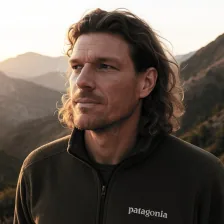
By Steven Keen
MSc Responsible Tourism Management (in progress), GSTC- and ICRT-certified
18 min read Updated on Sources verified on
Key Challenges & Regenerative Solutions
1. The Water Paradox (Hydrological Regeneration)
Winter rain flows to the sea; summer tourism depletes aquifers. Crete faces a growing water crisis that threatens agriculture and ecosystems alike.
Harvesting winter rain in cisterns—a practice on this island since antiquity—and planting deep-rooted trees to slow runoff, so more of the wet season stays on the land.
Support hotels using greywater recycling and ask about water conservation practices before booking.
2. Soil Erosion & Desertification
Abandoned terrace farming (pezoules) leads to soil collapse. Ancient agricultural infrastructure is crumbling without maintenance.
Tourism revenue funding the repair of dry-stone walls—a craft UNESCO inscribed in 2018 as Intangible Cultural Heritage of Humanity, with Greece among the inscribing states.[4] Visitors can take part in terrace restoration as a genuinely useful activity.
Support farmers cultivating carob trees (drought-resistant “Black Gold”)—an ancient crop with modern potential.
3. Marine Biodiversity
Anchoring destroys Posidonia oceanica meadows—the Mediterranean’s endemic seagrass, whose beds store carbon in their root mats over centuries and rank among the sea’s most important carbon sinks and nurseries.[5] A dragged anchor undoes decades of that accumulation in minutes.
No-anchor zones and invasive species management. Some restaurants now serve lionfish—turning an invasive species into a culinary attraction.
The Asset Register: What Crete Has to Regenerate
Regeneration begins with an inventory, so here is the island’s, stated the way an honest balance sheet would state it—each asset with its documentation and with what visitor money can actually do for it.
The flora. Around 1,740 native plant taxa, roughly one in ten found nowhere else on Earth[1] —a concentration of endemism that makes a Cretan hillside in April one of Europe’s great biological spectacles, and makes the same hillside’s degradation an irreversible global loss rather than a local one. What tourism can fund: botanical guiding as a profession (knowledge priced properly keeps knowers on the island), visitor observations feeding the scientific record, and the simple economics of trails valued enough to maintain. What it must not fund: the picking, digging, and trading of the endemics themselves—the same study documenting the wealth documents that trade.[1]
The protected network. 54 Natura 2000 sites over about 141,318 hectares, on land and in the surrounding sea[2] —on paper, a vast protected network; on the ground, a network whose management is chronically underfunded everywhere in the Mediterranean. Visitors are among the few constituencies that give protected status a daily economic argument: every guided walk, every guesthouse that markets its Natura backdrop, every euro that arrives because a place is wild is a line in the case for keeping it so.
The blue meadows. Posidonia oceanica beds ringing the island’s shallows, their root mats banking carbon over centuries[5] —the Mediterranean’s old-growth forest, lying invisible under every anchorage. Fundable: moorings, patrols, surveys. Breakable: by one charter dragging one anchor through one afternoon.
The stone and the hands. The dry-stone craft UNESCO inscribed in 2018[4] is the infrastructure of the whole terraced interior—erosion control, water management, and cultural identity in one technology—and its true asset is not the walls but the dwindling number of people who can build them. Which is where the island’s most fragile asset of all comes in: the working village itself, the subject of the next section, because every other line on this register is maintained by people who need a reason to stay.
The Village Question
Crete’s interior runs on villages, and the villages run on a demographic engine that has been losing pressure for two generations: the young leave for Heraklion, Athens, and abroad, because the village economy—olives, sheep, a kafenion—cannot pay what a city can. Every asset on the register above is downstream of that engine. Terraces hold because families work them; groves produce because someone prunes; the craft survives while a mason still takes apprentices; even the landscape’s fire resistance is partly a function of grazing and clearing that happen only where rural life persists. A village that empties does not merely lose its people—it drops the maintenance contract on everything around it.
This is where tourism stops being a threat to be managed and becomes the counterweight—if its income reaches the interior. A guesthouse that lets a family stay; a taverna that makes the grandmother’s recipes a business; a guiding income that makes knowing the mountain a profession; a harvest week that brings customers to the press—each is a salary’s worth of reasons for one more young family to stay put. The distribution argument this page keeps making is, at bottom, a demographic one: the same visitor euro that adds nothing but load on the August coast can be, in a November village, part of the answer to the island’s oldest modern question.
Field note · Steven Keen
The test I trust is the school bus. When I arrived, it stopped in our village for a handful of children; the neighboring village had already lost its stop, and a village that loses the bus has usually lost the argument. Every guest bed filled in the working months, every canister of oil sold beyond the island, is on the side of the bus still stopping. That is what “regenerative tourism” means here, stripped of every conference word.
The Water Ledger, in Detail
Water is the ledger on which every other Cretan regeneration either balances or fails, and it has been the subject of serious scientific management attention for decades—the standing analysis of the island’s water economy dates to 2001 and already framed the essentials: a mountainous island whose resources are unevenly distributed in space and time, with agriculture as by far the dominant consumer.[6] The structure of the problem is a double mismatch. In time: the rain arrives in winter, torrentially, while demand peaks in the rainless summer. In place: the mountains catch the water while the coasts—where the fields, the cities, and the hotels sit—spend it. Tourism sharpens both mismatches at once, because the visitor peak is timed precisely to the driest months[3] and located precisely on the thirstiest coast.
The regenerative responses run in both directions of the ledger. On the supply side, the island’s own history is the manual: cisterns that bank the winter rain (a practice here since antiquity), terraces whose walls slow the runoff long enough for it to soak, deep-rooted trees—olive, carob—that hold what the storms deliver. Every one of those technologies is fundable by visitor money and several are joinable by visitor hands. On the demand side, the honest levers belong to the accommodation sector: greywater to the gardens, rain to the cisterns, and above all the design decision between the two Cretan hospitality archetypes—the lawn-and-pool compound that imports a north-European landscape onto a semi-arid island, versus the shaded courtyard, the vine pergola, and the sea fifty meters away doing the pool’s job better than the pool.
The traveler’s own water shadow is mostly cast at booking time, not shower time. Choosing the courtyard over the lawn, the shoulder season over the August peak, and hosts who can answer “where does your water come from and where does it go?” moves more water than a fortnight of short showers—though take the short showers too; on this island they are a form of respect.
The Groves: Where the Island’s Ledgers Meet
If you want to see all three regeneration ledgers—ecological, cultural, economic—converge in a single living system, walk into an olive grove. The trees hold the slopes the terraces built; the harvest structures the village winter and calls the scattered family home; the oil is the island’s principal agricultural export and the base of every meal a visitor will eat. A grove in care is erosion control, cultural transmission, and local income at once. A grove abandoned is all three failing together—the walls slump, the skills lapse, the village’s reason thins.
Tourism connects to the groves through three honest doors. The table: every taverna meal cooked in the village’s own oil is grove revenue—and the better places will tell you whose trees you are tasting. The harvest: from late autumn the island needs hands, and a based, reliable visitor can genuinely join—the deepest single day of participation Crete offers (the how-to page’s participation rules apply). The canister: oil bought directly from a producing family, carried or shipped home, is the rare souvenir that funds next year’s landscape maintenance—and turns a one-week visit into a year-round customer relationship, which is the aftermath practice this network keeps recommending.
Field note · Steven Keen
My first harvest, I was given the nets to lay because it is the job you cannot ruin. By the third year I was trusted with a ladder. That progression—from tolerated to useful—took thirty mornings spread over three Novembers, and it taught me more about what this island needs from its visitors than everything I have read on the subject, including the things I have written.
A Regenerative Week, Sketched
Not an itinerary to follow—a shape to steal, shown for one October week from one village base in the island’s working interior. Day one is arrival and nothing else: the market if it is market day, the kafenion, the walk to get lost properly. Day two, the landscape on foot—one of the island’s protected places, of which Crete has 54 under Natura 2000 across roughly 141,000 hectares,[2] with the observation app running and the geotags kept vague. Day three belongs to the sea: the south-coast swim, and where a survey or cleanup runs, the snorkel that counts—over meadows whose centuries of stored carbon[5] are the reason the boat anchors at the buoy.
Day four is the hands day—harvest, wall, or farm, whichever the season and the village actually offer. Day five is deliberately soft: the rest that keeps the week sustainable is its own discipline with its own sister site (the field guide, same author, same island). Day six goes deep on one thing—the press, the winery, the workshop, the producer whose name has been on every menu all week. And day seven, before the ferry, is the audit evening from the how-to page: the receipts sorted, the observations submitted, the canister ordered, the return sketched. Seven days, one village richer in documented ways—and a traveler who knows exactly what their week did.
Practical Guide: How to Visit Crete Regeneratively
1. Eat the Landscape
Order Dakos (barley rusk, local tomatoes, oil, cheese)—a dish built almost entirely from what the island grows. Drink local wines like Vidiano, whose old varieties survive exactly as long as someone keeps ordering them.
Every meal is a vote. Choosing local, seasonal food supports the farmers who maintain the landscape you came to enjoy.
Field note · Steven Keen
The terraces above my village tell the whole story in stone. Where a family still works its olives, the walls stand and the winter rain soaks in slowly; where a family left for Athens in the eighties, the walls have slumped and the topsoil goes down the gully with the first November storm. Regeneration here is not an abstraction—it is somebody paying, with money or with weekends, for walls to be stacked again. Tourism is one of the few honest ways that money arrives.
2. The “Xenia” Contract
Honor the ancient Greek code of hospitality. Respect the village’s afternoon quiet hours (the mesimeri) and dress modestly in churches and monasteries.
Xenia is a two-way relationship: the host offers generosity, the guest offers respect. When both sides honor this contract, magic happens.
3. Seasonal Calibration
Spring (March–May)
The island’s wildflower explosion, herb-gathering walks, empty beaches at pleasant temperatures. The landscape is at its most alive.
Autumn (Sept–Nov)
Grape harvest, olive harvest, Rakokazana (raki distillation as community events), mushroom season in the mountains. The landscape gives its gifts.
Avoid August to reduce pressure on the island’s carrying capacity. Your absence in peak season is itself a regenerative act.
4. Base in the Working Interior
The single largest routing decision is where you sleep. A base in an interior village or a south-coast settlement—rather than the north-coast strip—puts your entire week’s spending into the economy that maintains the landscape, and it reverses your role: on the strip you are one of thousands; in a village of two hundred you are news, and your money is infrastructure.
The strip has its function—it concentrates the volume the island currently depends on. But it does not need you; the interior does, and the interior is also, not coincidentally, where the Crete people fall in love with actually lives.
5. Move Like a Guest, Not a Fleet
The island’s default visitor unit is the rental car, and no single traveler will change that—but the regenerative margin is real: the KTEL buses connect the cities and the major south-coast towns cheaply and reliably; the coastal ferries turn the roadless south into a slow itinerary; and a village base shrinks daily driving to nearly nothing, because the point of the base is that everything worth doing starts at the front door.
Where a car is genuinely needed—and in the deep interior it often is—the regenerative version is fewer, longer drives from one base, not a daily circuit of the island’s photographed ten.
6. Consider the Working Winter
The island’s most regenerative season is the one the industry writes off. From November the coasts close and the interior opens: the olive harvest runs, the raki stills smoke, the feasts land midweek, and a visitor is not a market segment but a minor event. Winter income is the rarest and most precious kind a village can receive—it arrives when nothing else does, and it goes almost entirely to locally owned hands because nothing else is open.
Be honest with yourself about the trade: mountain weather, short days, some things shut. What you get in exchange—the island as it actually is, and a welcome with time in it—is what the other eleven pages of this network keep trying to describe. (What that unperformed winter can do to you, rather than for the place, is the sister site’s territory: transformational travel on Crete.)
7. If You Run a Business on the Island
Crete is arguably the easiest major destination in Europe to run the regenerative playbook on, because the island’s assets and its business levers are the same objects. The seasonality dividend is enormous here—with 42% of Greek accommodation nights compressed into two months,[3] the operator who builds a real November product (harvest stays, walking weeks, the working island) is expanding into an almost empty market with the infrastructure already paid for. The water levers are concrete and visible to guests (cistern, greywater, the courtyard-over-lawn design decision). The heritage participation products—dry-stone workshop days, grove adoptions—convert the landscape’s maintenance backlog into experiences people pay for.[4] And the measurement story writes itself in units a guest can stand next to: wall-meters, trees, hectares.
The full operator’s case—the asset-protection logic, the first twelve months sequenced, the five patterns worth copying—is the business-case page’s territory (one disclosed data point: the author’s own initiative on the island, CRETAN®, is built around this playbook from the ground up—named here because this page’s standards apply to it like to every operator): why regeneration pays. This page’s contribution is local: on Crete, every argument on that page has a street address.
What Your Euro Does—Two Paths Through One Island
Follow one visitor euro down each of Crete’s two tourism economies and the whole argument of this page compresses into a travel diary. Path one: the euro lands in an all-inclusive package priced abroad, sleeps in internationally owned beds, eats through an imported supply chain, and excursions by coach to the same three photographed sites—touching the island’s living systems mainly as load: water drawn in August, waste barged out, wages at the sector’s floor. Nothing about that path is villainous; it is simply a supply chain that happens to pass through a landscape. Path two: the same euro arrives in October, sleeps under a family’s roof, eats the village’s oil and the season’s vegetables, pays a guide for a day of knowledge and a producer for a canister of oil—and every stop on its route is also a maintenance payment: to the grove, the terrace, the skill, the reason a young family stays.
The island needs both economies today, and this page is not a sermon against the first. It is a map of the second—because path two is the one a single traveler can choose entirely, this afternoon, with no institution’s permission. Multiply it by the growing number of travelers who want their money to mean something, and the distribution problem this island calls overtourism starts to look like what it actually is: a routing problem, with the fix in the visitor’s hands.
Frequently Asked Questions
When is the best time to visit Crete regeneratively?
The working seasons: spring (March-May) for the wildflower peak and empty trails, autumn (September-November) for the grape and olive harvests and the raki-distilling weeks. 42% of Greece’s accommodation nights compress into July and August; arriving outside that peak delivers your money when communities actually need it and your presence when the island has capacity to spare. Avoiding August is itself a regenerative act.
Can visitors actually participate in regeneration on Crete?
Yes, genuinely: olive and grape harvests run on short bursts of many hands; dry-stone terrace repair is a UNESCO-inscribed craft visitors can learn at organized workshops; WWOOF Greece lists organic host farms on the island; and every walker with a phone can contribute biodiversity observations via iNaturalist. The rule that keeps it honest: the work would exist without you—you are joining the island’s maintenance, not consuming a volunteering product.
Is Crete overtouristed?
The honest answer is: parts of it, part of the year. The north-coast resort strips and the famous gorges run at capacity in the July-August peak, while the interior, the south, and eight months of the calendar hold enormous unused capacity. Crete’s regenerative question is distribution, not prohibition—moving visits into the shoulder seasons and the working interior turns the same demand from load into lifeline.
What should I buy to actually support the island’s living systems?
Buy the landscape’s own work, from the people who do it: olive oil from the family press (bring or ship a canister home—it funds next year’s terraces), wine from old Cretan varieties like Vidiano, honey, herbs, and carob from named producers at the weekly markets. The test is the same everywhere on this site: the shorter the path from land to hand, the more your euro regenerates.
References
Links go to the original publisher wherever one exists online; print-era sources are cited in full instead. All links verified July 9, 2026.
- Endemic plants of Crete in electronic trade and wildlife tourism: current patterns and implications for conservation — Krigas, N. et al. Journal of Biological Research-Thessaloniki, 2019 - documents ~1,740 native plant taxa on Crete, roughly one in ten endemic.
- About Natura 2000 on Crete — Region of Crete, official Natura 2000 portal - 54 Natura 2000 sites on Crete covering about 141,318 hectares.
- Seasonality in the tourist accommodation sector — Eurostat, Statistics Explained (data for 2025) - 42% of nights spent in Greek tourist accommodation fall in July and August alone.
- Art of dry stone walling, knowledge and techniques — UNESCO Representative List of the Intangible Cultural Heritage of Humanity, 2018 (Greece among the inscribing states).
- Patterns of Carbon and Nitrogen Accumulation in Seagrass (Posidonia oceanica) Meadows of the Eastern Mediterranean Sea — Apostolaki, E. T. et al. Journal of Geophysical Research: Biogeosciences, 2024.
- Water resources management in the Island of Crete, Greece, with emphasis on the agricultural use — Chartzoulakis, K. S., Paranychianakis, N. V. & Angelakis, A. N. Water Policy 3(3), 2001, pp. 193-205.
Steven spent a decade making documentaries in the places tourism forgets—with his work held in the archives of the UN’s International Labour Organization—before he went to live in one: a mountain village on Crete, his home since 2023. He is completing an MSc in Responsible Tourism Management (GSTC- and ICRT-certified) and founded CRETAN®—disclosed wherever it is mentioned.
The practical observations on this page come from the author’s daily life on Crete; they are marked as field notes where first-person, and cited where empirical.
Read more about this resource →Where to Go from Here
- What Is Regenerative Tourism? The framework behind this island guide: origins, the ten principles, and the honest boundary of what regenerative means. Read the definition →
- How to Travel Regeneratively The general method behind the Cretan week: vetting operators, protocols of engagement, and the personal three-ledger audit. Get the full method →
- The Business Case for Regenerative Tourism Why the island’s hosts would take this deal: the seasonality dividend and a twelve-month blueprint for hotels. Read the business case →
Explore Our Companion Resources
- responsibletourism.com Your euro’s two paths, told from the responsibility angle: keeping money local, shoulder-season timing, and the two journeys of €100. (opens in new tab)
- ethicaltourism.com The cultural half of a Cretan visit: living culture versus cultural theater, the village calendar, and how to be welcomed. (opens in new tab)
- softtravel.com The pace this island rewards: a field guide to gentle Cretan days—seasons, bases, budgets, and where the quiet is. (opens in new tab)